
Beginner’s Guide to Lipstick Plants
We don’t call ourselves “lipstick dealers” for nothing. When my dad introduces these plants, he gives a black box warning: “we’ll start you with one, you’ll get it to bloom, then you’ll think, ‘wow, I remember they had other colors, I need another one!’ & pretty soon you’ll be so addicted, we’ll be legally obligated to give you a number to call.”
Our first introduction to these flowering plants was only once we started selling houseplants. They may not be the rarest plant, but they never stood out to either of us before. That is until we saw our first orange lipstick bloom. Since then, I’ve gotten further & further into collecting rare & more expensive houseplants, yet, lipstick plants still take up most of my window. & that’s what we mean when we say these plants are addictive.
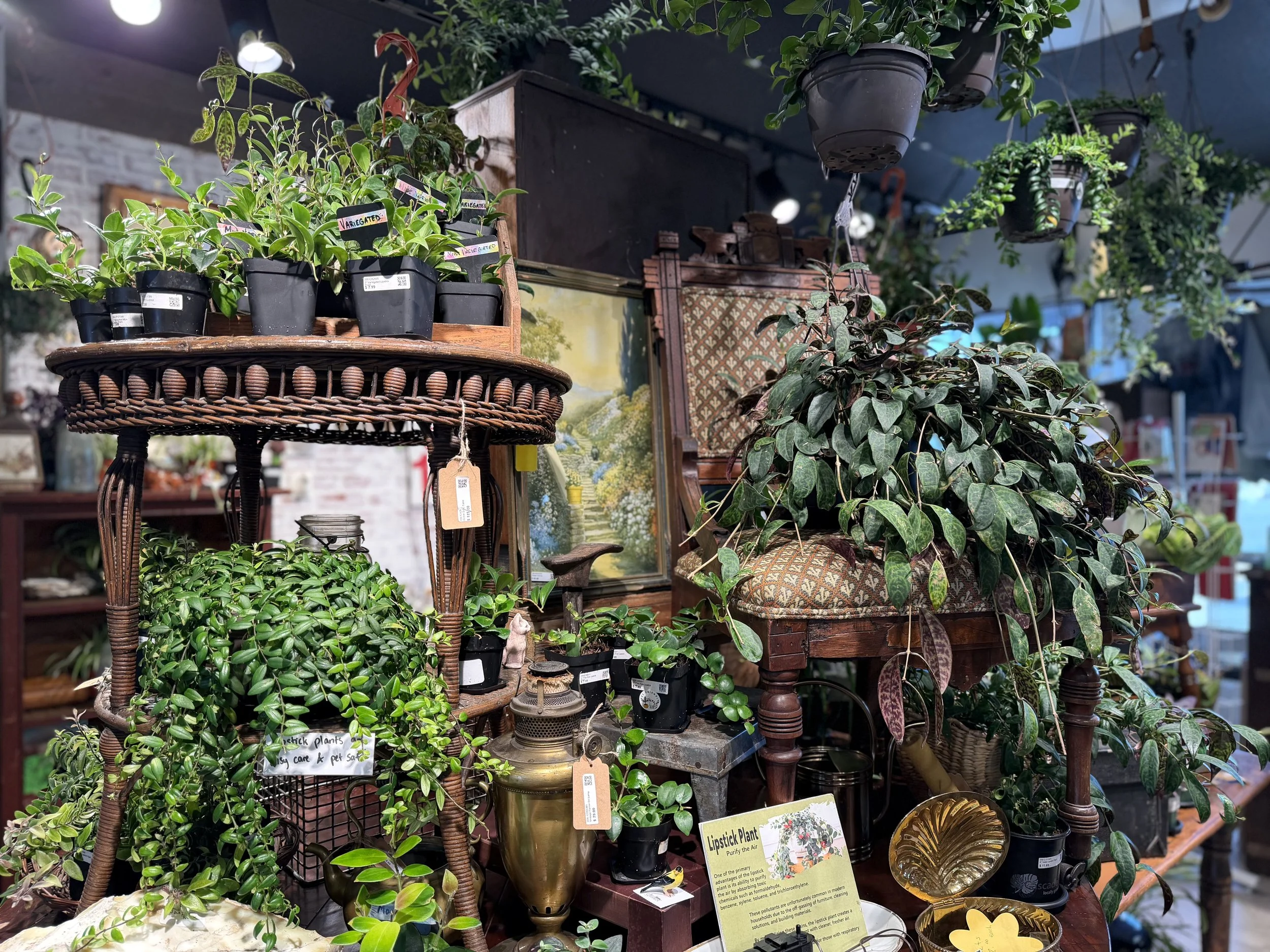
Lipstick Plant Display at Cat & Mouse
A Brief Overview of Aeschynanthus
Lipstick plants are a part of the genus, Aeschynanthus. In the wild, they are epiphytes (growing on the sides of trees & buildings with no soil). They are native to Southeast Asia, growing on tree branches & in rock crevices. The genus itself has more than 150 species, most of which are evergreen or tropical plants. Most lipstick plants can grow up to 10 feet long in ideal conditions. They prefer filtered light, often growing toward the bottom of the forest floor.
How to Care for Lipstick Plants
Lipstick plants are generally easy to care for, meaning they are tolerant of a lot of care mistakes. They can go completely dry between waterings, though they like to only go mostly dry. They can thrive in dense, moisture-retaining soil, though they prefer a chunky tropical houseplant mix. They can even bloom without regular fertilizing. As for lighting, they’ll tolerate any kind of light, so long as it’s getting some (see our other post on lighting for more information on “low light”).
In an ideal situation, lipstick plants will want medium to bright indirect light, regular waterings when mostly dry, chunky soil mix & repots when root bound (usually every 1.5-2 years).
Our Favorite Varieties
Thai Pink Lipstick Plant
I’m going to go ahead & start with my dad’s absolute favorite lipstick variety. He loves the Thai Pink not just for its round, succulent-like foliage, but for its bright pink tubular blooms. When we get the chance to see these bloom in person, they have a higher contrast against the leaves than a picture could ever do justice.
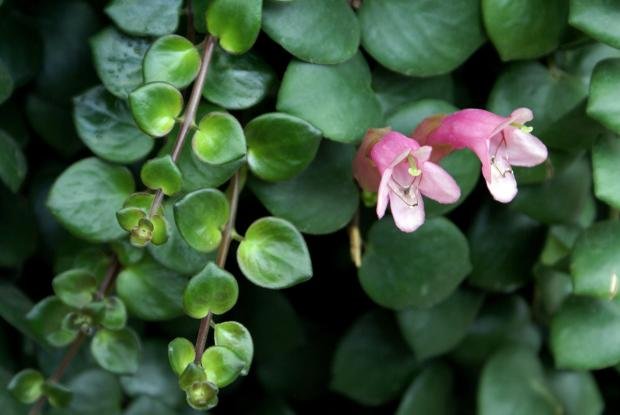
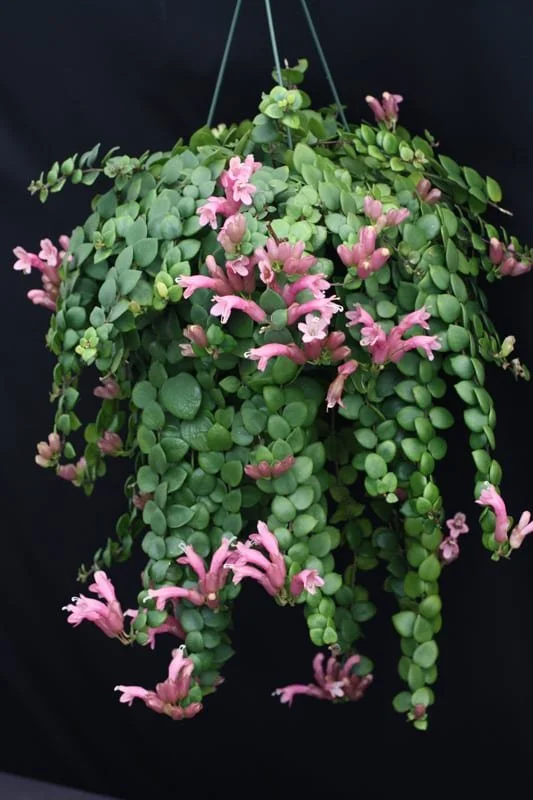
Most lipstick plants you’ll find have red blooms of various shades, which makes this distinct pink bloom extra special. When we have the opportunity to stock these in our shop, we often sell out within days. For anyone looking to collect these fun flowering plants, Thai Pinks are an absolute must have.
These trailing plants often get 2-3 feet long, with heavy leaves making them trail nearly straight down the pot in a sort of cascade. Shorter branches of new growth sit at the crown of the plant & often stick straight up or flop just barely to the side. This creates a full look that other trailing plants just lack.
Tricolor Lipstick Plant
Tricolor lipstick plants are nearly identical in foliage to the Thai Pink. They feature the same rounded succulent-like leaf shape & will even have the same growth pattern. But if you look closely, the leaves have a sharper point to them that is more noticeable as the plant grows. Like the Thai Pink, the leaves of this plant also stay smaller—often getting only to a dollar coin size or just bigger.
But the real reason we love this variety: the blooms.
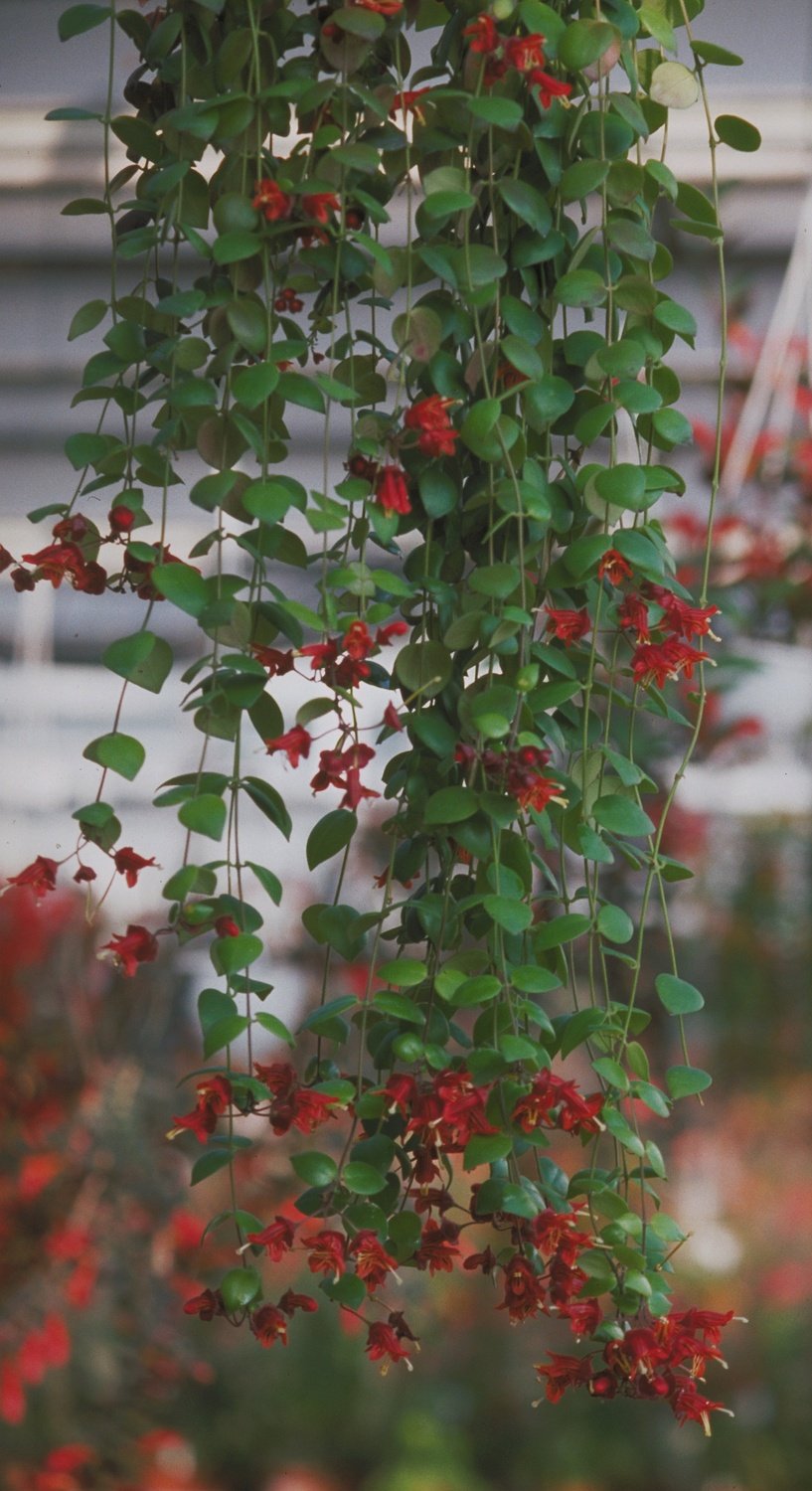
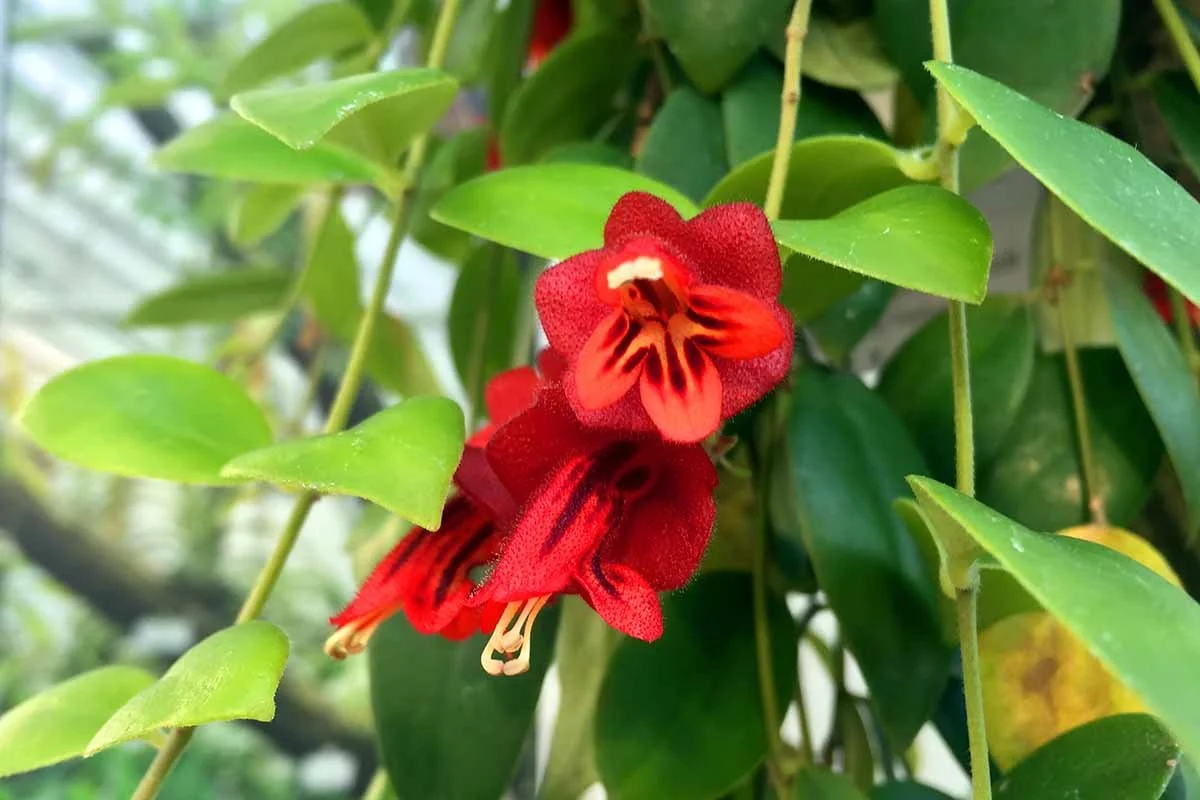
Tricolor lipstick plants are named after their distinct three color bloom: bright red with orange & brown stripes. In person, this coloring is especially striking. The dark lines of the stripes contrast greatly against the bloom color & are highlighted by the orange. I often describe them as “tiger striped tubular bloom,” but nothing can quite describe them as well as seeing them in person.
My Tricolor lipstick plant is in a 6” pot, hanging in my east facing window. It will bloom just about every other month & each time it blooms, it will have clusters throughout the entire foliage—up to 40 blooms.
Bicolore Bolero Lipstick Plant
If you want something with a funky color that grows kind of like a bad haircut, Bicolore Bolero is your guy! These elliptical leaves features a bright green edge with faded green centers. When you take a step back, the colors of the foliage stand out against any background. It is a neutral, but bright foliage for those looking to diversify their collection. Next to a darker leafed plant, this beauty will stand out.
Like many of the other red blooming lipstick plants, this variety has a cup that precedes the bright red bloom. The high contrast trumpet shaped blooms pop, making it a real showstopper.
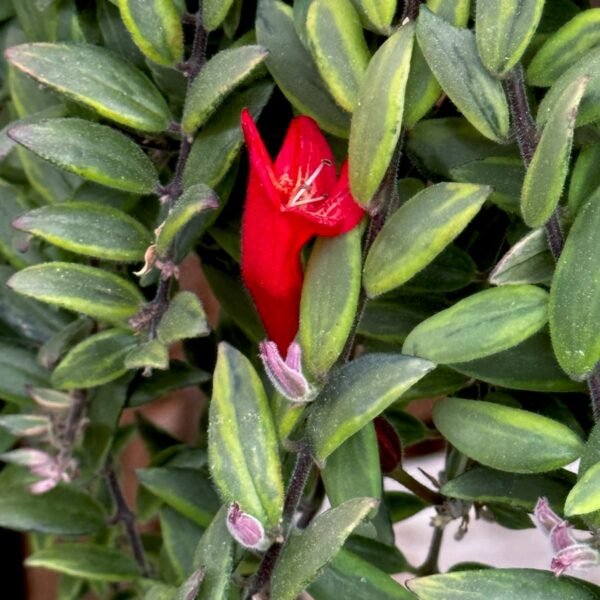
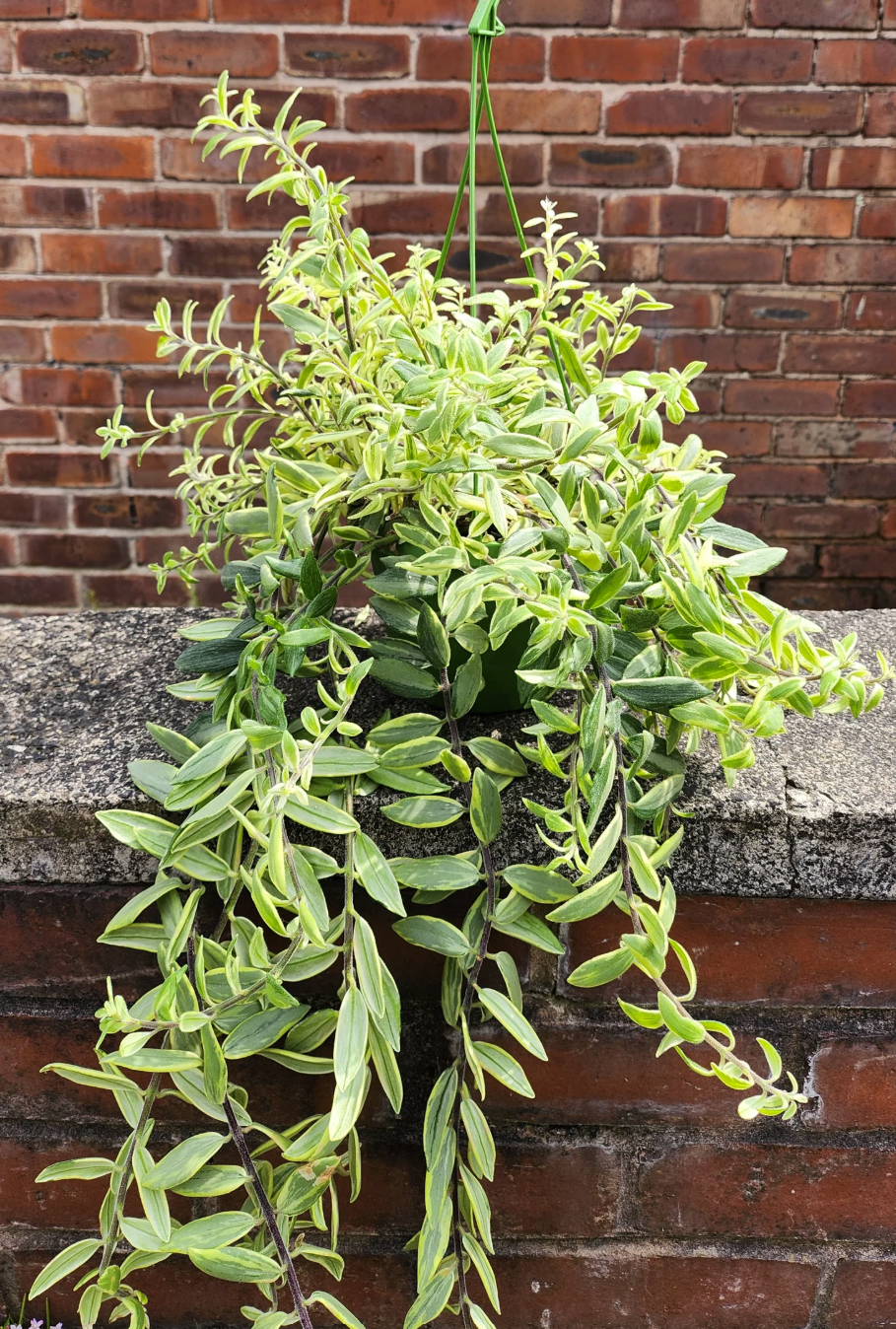
The variegation of the leaves is what makes this variety stand out. & it’s often what draws folks to buy it. It is unlike most other plants you’ll find in the easy-care, pet-friendly realm.
Orange Lipstick Plant
You may have noticed a pattern yet with our favorite varieties: they all have high contrasting blooms. & Orange lipstick plants are no different. These plants have a more elongated leaf shape & lean more toward a bush-like growth than a full trail. They tend to be one of the fuller varieties of lipstick plant.
The blooms themselves are a bright orange that fades into a fiery orange tip. Their stamens stick out making them look alien like. I’ve never seen one of these plants blooming without several large clusters covering the entire plant.
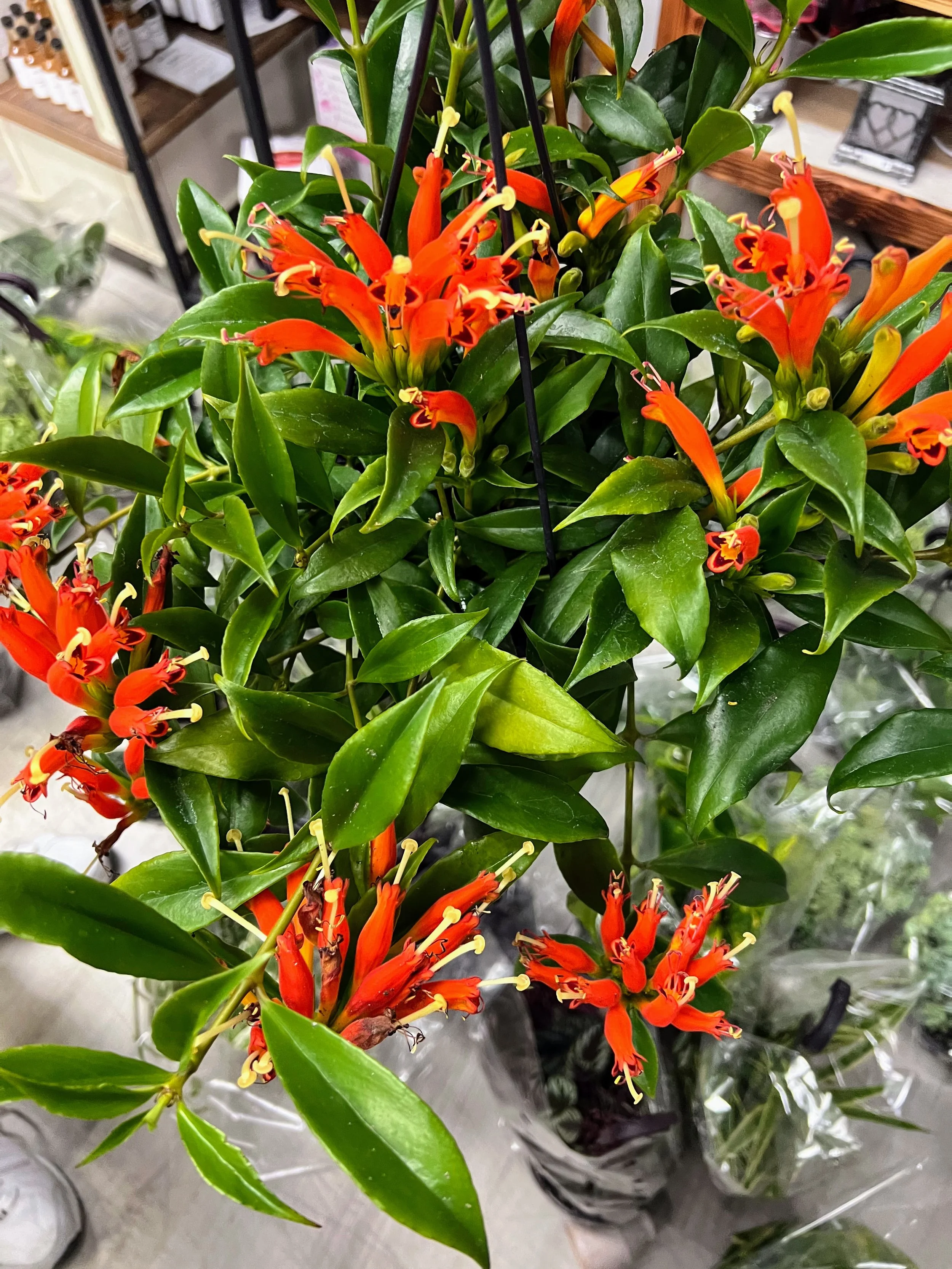
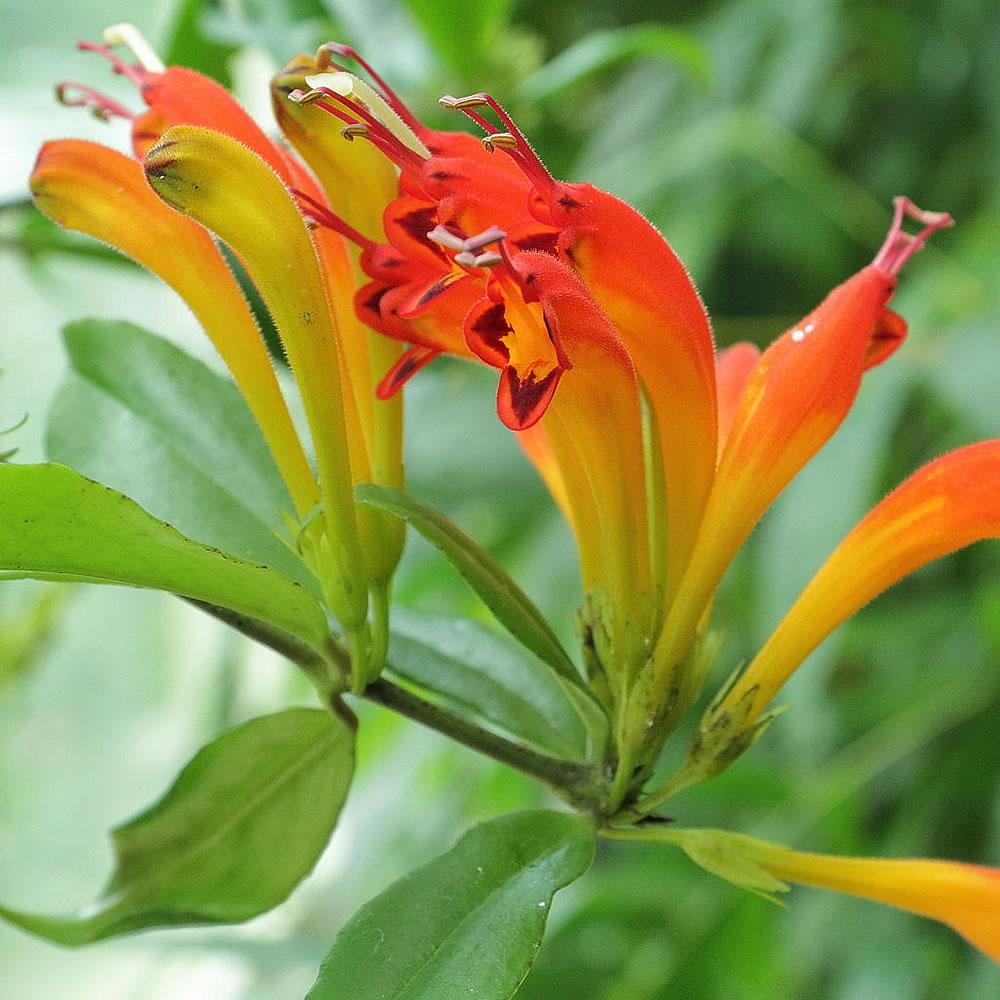
Like the Thai Pink, this variety is a quick seller at our shop. It is among the easier of the varieties to get to bloom & the blooms can last up to 3 weeks.
Black Pagoda Lipstick Plant
Okay, we are finally to my personal favorite lipstick plant, the Black Pagoda. Now, I love this plant purely for its foliage. It features dark tops of the leaves & purple “zebra striped” undersides. They are elliptical in shape & longer than any of the other lipstick plants mentioned here. Still, the biggest leaves only measure 3.5” in length, making it more compact than other trailing plants like pothos.
The growth pattern of these plants is also significantly different than the previously mentioned varieties. Instead of a long trail, Black Pagodas will bush out, eventually flopping over into a sort of trail. As they move into larger & larger pots, they will trail a little bit more, but they will never have that 3+ foot long trail. This variety takes up SPACE. & that’s exactly why I love it in my home & when I design spaces for others. They can sit on their own shelf or plant stand, full, lush & dramatic. To me, they are more of a designer plant.
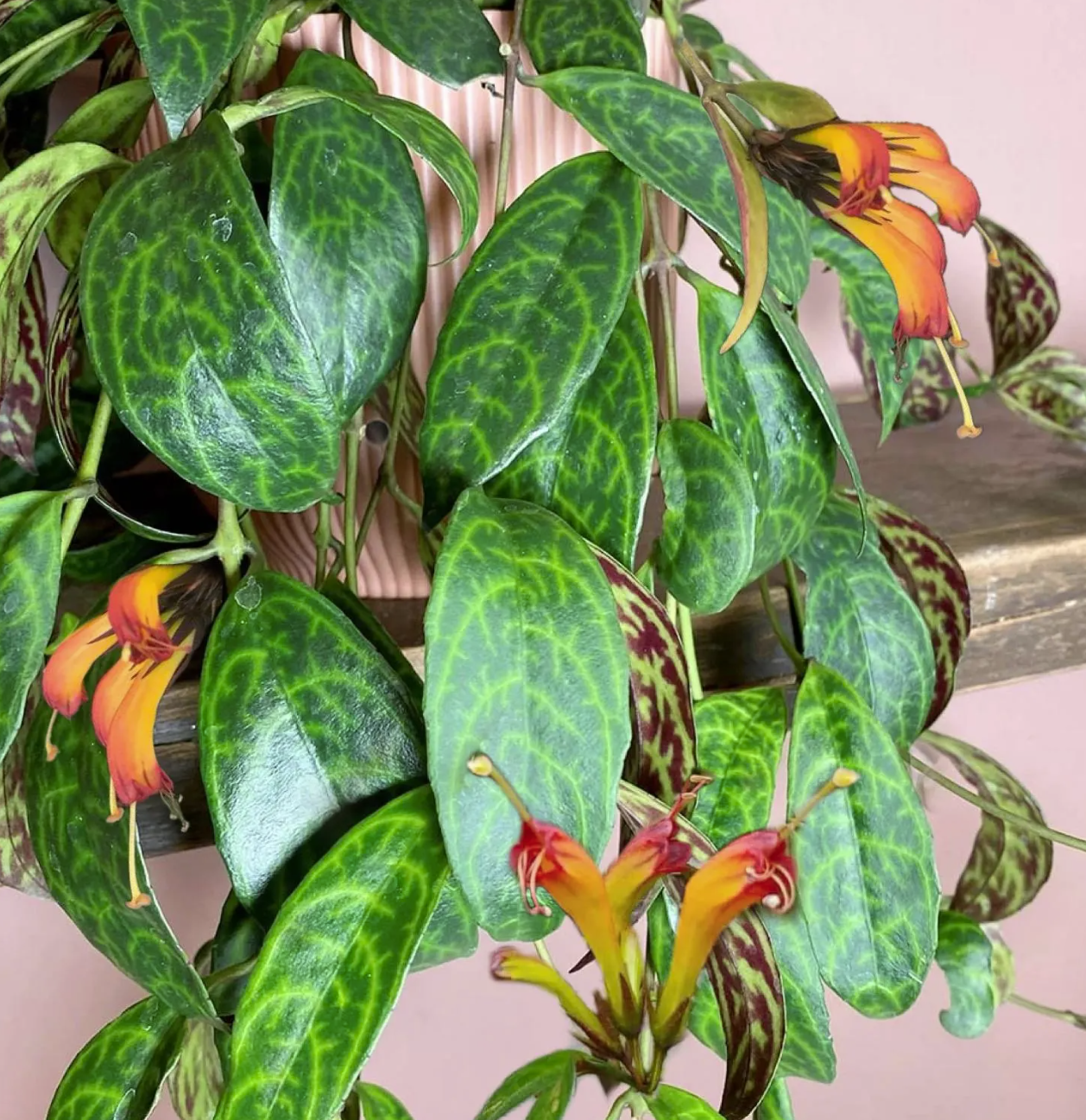
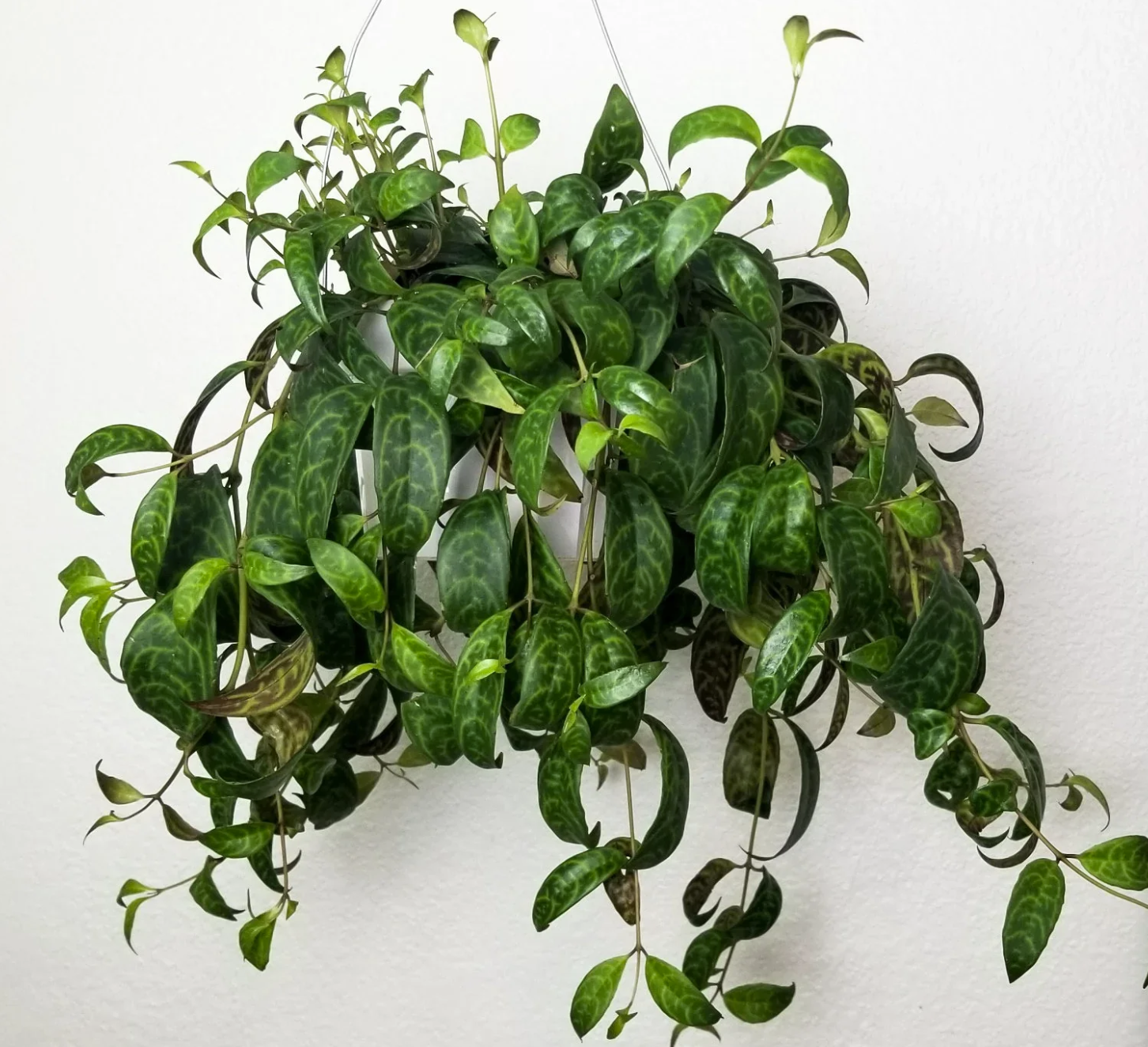
I would be remiss if I didn’t at least mention the blooms on this variety. The start as a lighter green, tubular shaped flower & eventually fade into a yellow to orange ombre color. Against the dark leaves, they stand out, but I don’t think they have nearly as high a contrast as any of the other plants mentioned in this list. They are, however, one of the easier varieties to get to bloom.
Ruby Lipstick Plant
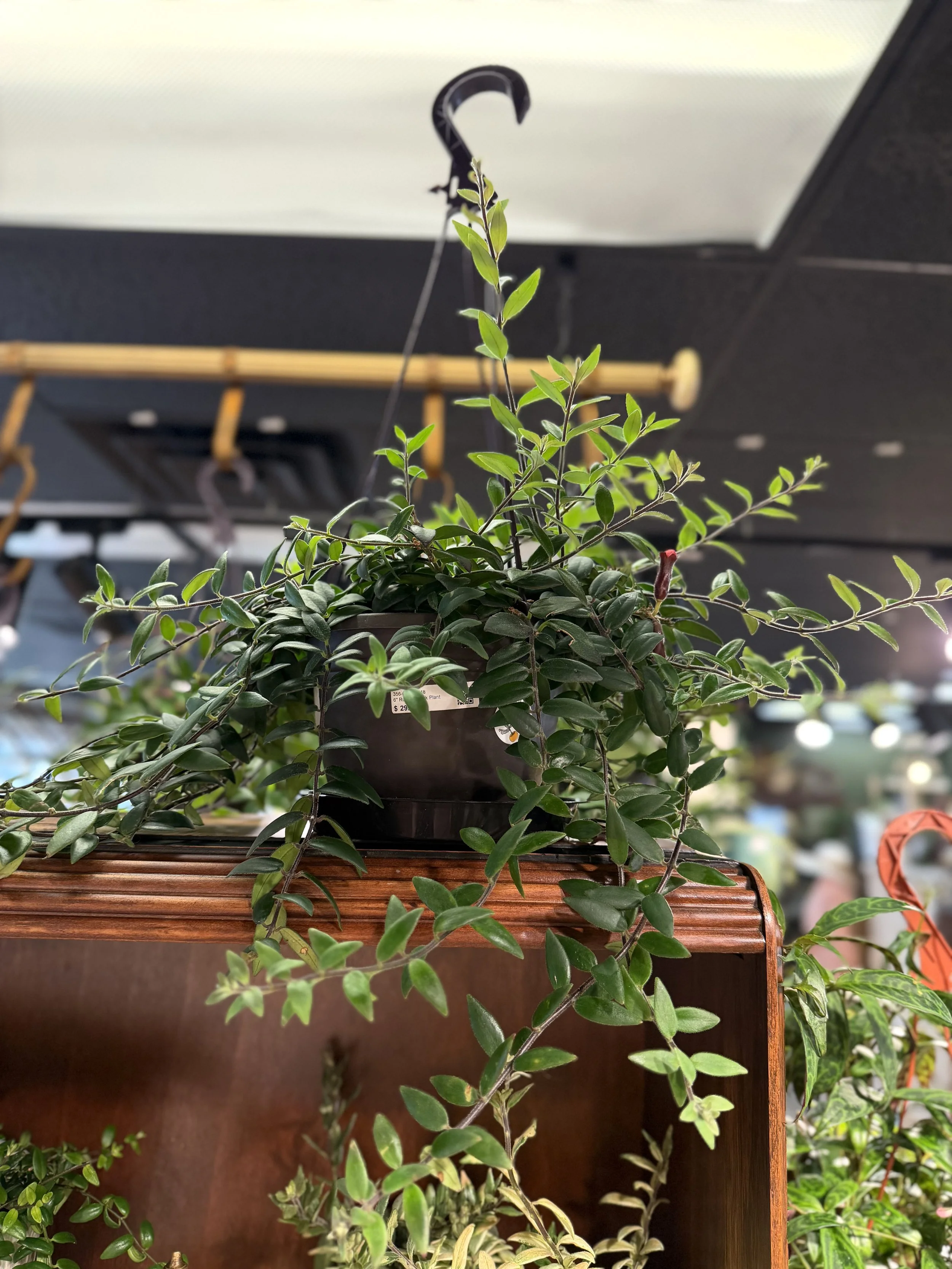
I think Ruby lipstick plants are a sleeper. People often pass these beauties up, even when they are just starting to bloom, until they see an example of a large plant (in a 6” pot size or bigger). They trail much like Black Pagodas: bush-like, eventually growing downwards once the stems get too long & heavy. They almost always look like a full, lush plant because of this growth pattern. Even when they aren’t at their best, they continue to grow, filling any empty spots in their pot. Their elongated, sharp pointed leaves feel dramatic & edgy as they continue to grow long.
When Ruby lipstick plants bloom, they start with what I call a “cup,” a bud that is cup-shaped & dark red in color that the actual flower will open out of. These cups will stay on the plant for up to 2 weeks before you see the main event, which will typically last for up to 2 weeks. When they are blooming, they will get a little extra thirsty. Not letting them dry out is the key to keeping those blooms for as long as possible.
Variegated Lipstick Plant
Now, I don’t want to say this plant is my dad’s second favorite lipstick plant, but it is one of his all time favorites. The leaves of this plant resemble the popular Mona Lisa lipstick plant (not shown in this post), but with splashes of color throughout. Newer growth is a splashy white color. As the leaves age, they darken, eventually gaining a purple tinge around the edges, the center a dark green. When you look closely at the foliage of this plant, its color is gorgeous.
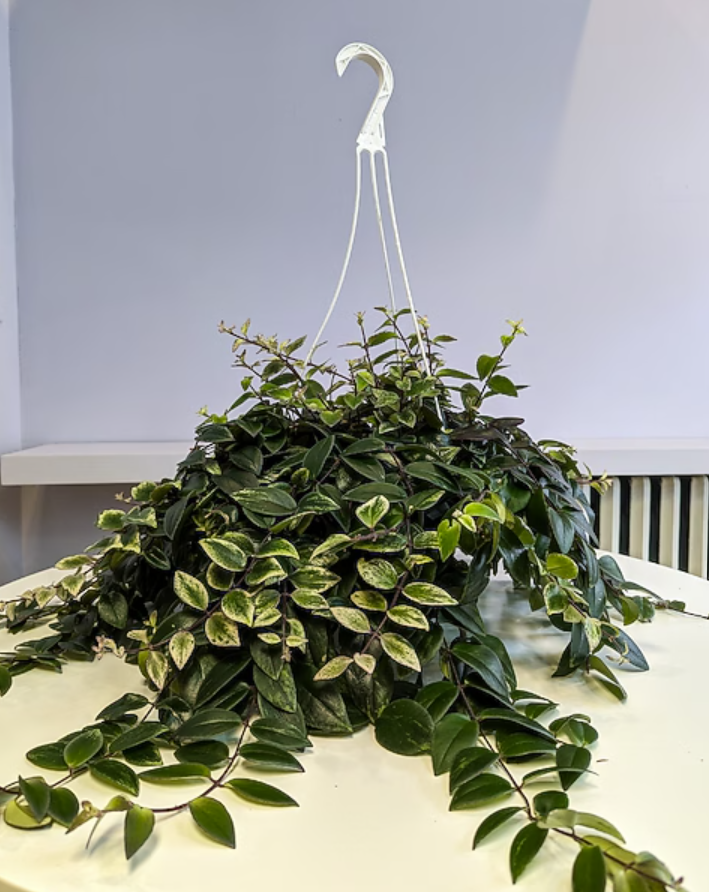
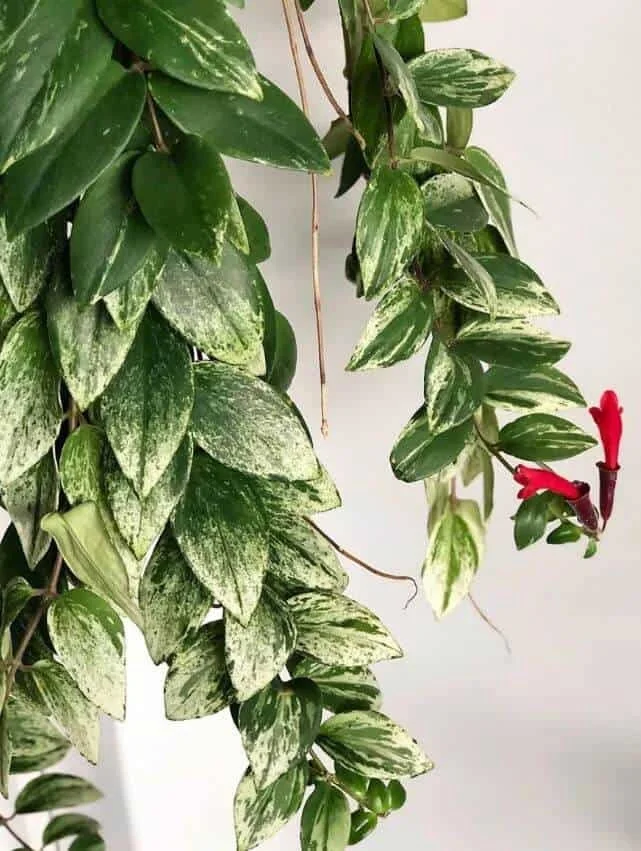
Like the Mona Lisa, Thai Pink & Tricolor lipstick plants, Variegated lipsticks have thick succulent-like leaves that cause them to trail as the stems get heavy. The end result is a gorgeous, full trailing plant with a variety of colors.
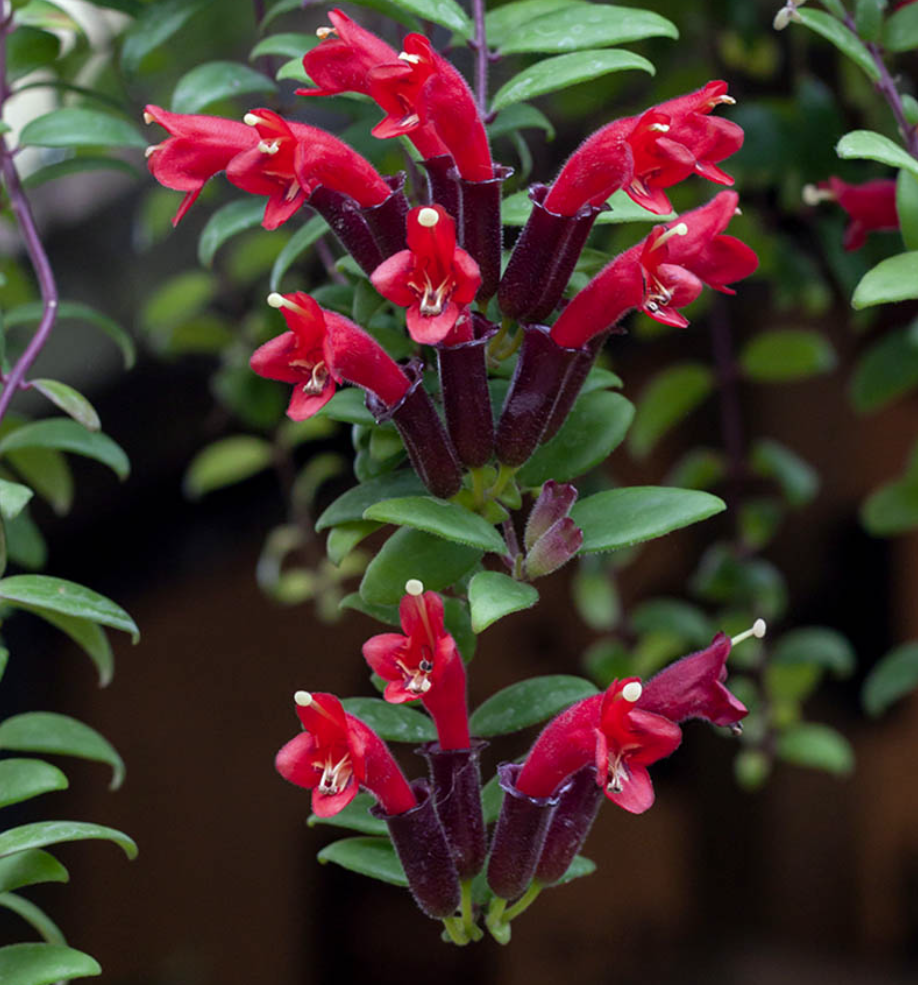
The blooms of this plant are much like our other red bloomed friends listed in this post. They begin as a dark red-maroon cup-like bud & eventually a bright red tubular bloom opens out from the bud’s center, much like a tube of lipstick. Against the splashy white foliage, it is especially breathtaking. Again, high contrast!
Who These Plants Are Best For
Now, I truly think everyone needs at least one regular blooming plant in their collection, & lipstick plants are some of my favorites to fit that bill. However, if I am going to recommend this plant to anyone in particular it would be someone who is learning to be good with plants. Maybe someone who needs pet-safe, non-toxic options. Or someone who isn’t sure about the quality of light in their home. Truly, these plants are great for experienced & inexperienced collectors alike, but of course, choosing a new plant is always up to personal preference. Whatever you choose, it should be one that brings you great joy to look at. If you are happy to see it, you’ll be happy to water it.