
Why You Should Love Hoyas
As a hoya-hater turned addict, I like to think I am qualified to tell you why you should actually love hoyas. If you talk to me in the shop, I will most likely bring up hoyas at some point within our conversation. They are hands-down one of my favorite plants to recommend, & not just because I have a personal collection of 160+ varieties. Hoyas meet you where you are at. They are great for beginners & seasoned collectors alike—in part because there is such a wide range of options available. Though I could talk your ear off about them now, not many people know that I absolutely did not like hoyas when I was first introduced to them. Before selling hoyas in our shop, I had never even looked twice at one. I never had any interested in attempting to keep one. But, when we made our first really big plant order, we were convinced to give the genus a try. & boy I am so glad that we did. I even have 2 plants from that very first stock nearly 2 years ago thriving in my windowsill at home. & I would even say they are 2 of my absolute favorite plants in my collection.
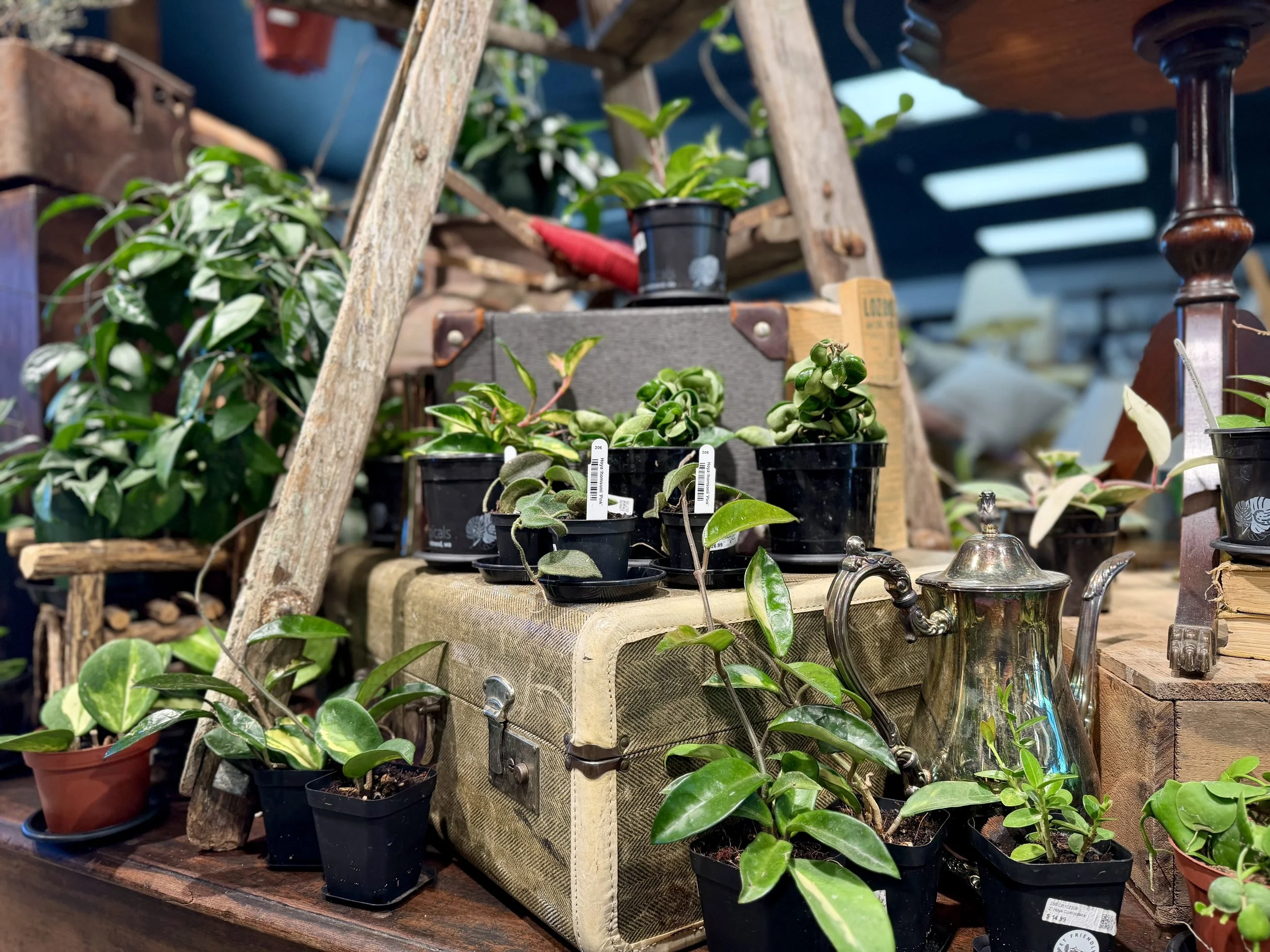
Hoya Display at Cat & Mouse Plants
Our first foray into hoyas was a bit of a disaster. The soil they were planted in by the growers was extremely moisture retentive & these plants were waterlogged. Over the weeks they were in the shop, they started to suffer from the overwatering. As a kind of last resort, we took them all home to my dad’s “plant hospital” & repotted them into a much chunkier mix. This is where our soil journey began. My dad found what would become one of my favorite blogs of all times, Vermont Hoyas, which taught us a little more about how exactly we should care for these things & why. Within weeks of repotting, all of the struggling hoyas make a comeback. New growth, greener leaves, fuller foliage. Their root systems more than doubled in 2 weeks.
While it wasn’t until nearly a year later than I got one to bloom, by then the foliage had already made them my favorite genus. In another post, we’ll tell you a few secret tricks for getting your hoyas to bloom.
Myth: Hoyas Never Grow!
Jumping right in, we are going to start with the number 1 reason I hear hoya hate. “Hoyas never grow!” While that is definitely true for some of the slower growing varieties, that isn’t true for all hoyas. Hoyas like linearis, bella, krimson queen, pubicalyx, australis & mathilde are all known for growing quickly, even in less than ideal conditions. Other hoyas, might be slow growing for a number of reasons: insufficient lighting, lack of heat, low humidity, flat mite infestation, etc. If you have a hoya in your collection that just won’t grow, you’ll want to take steps to address these possible issues. & really, that can be some of the fun.
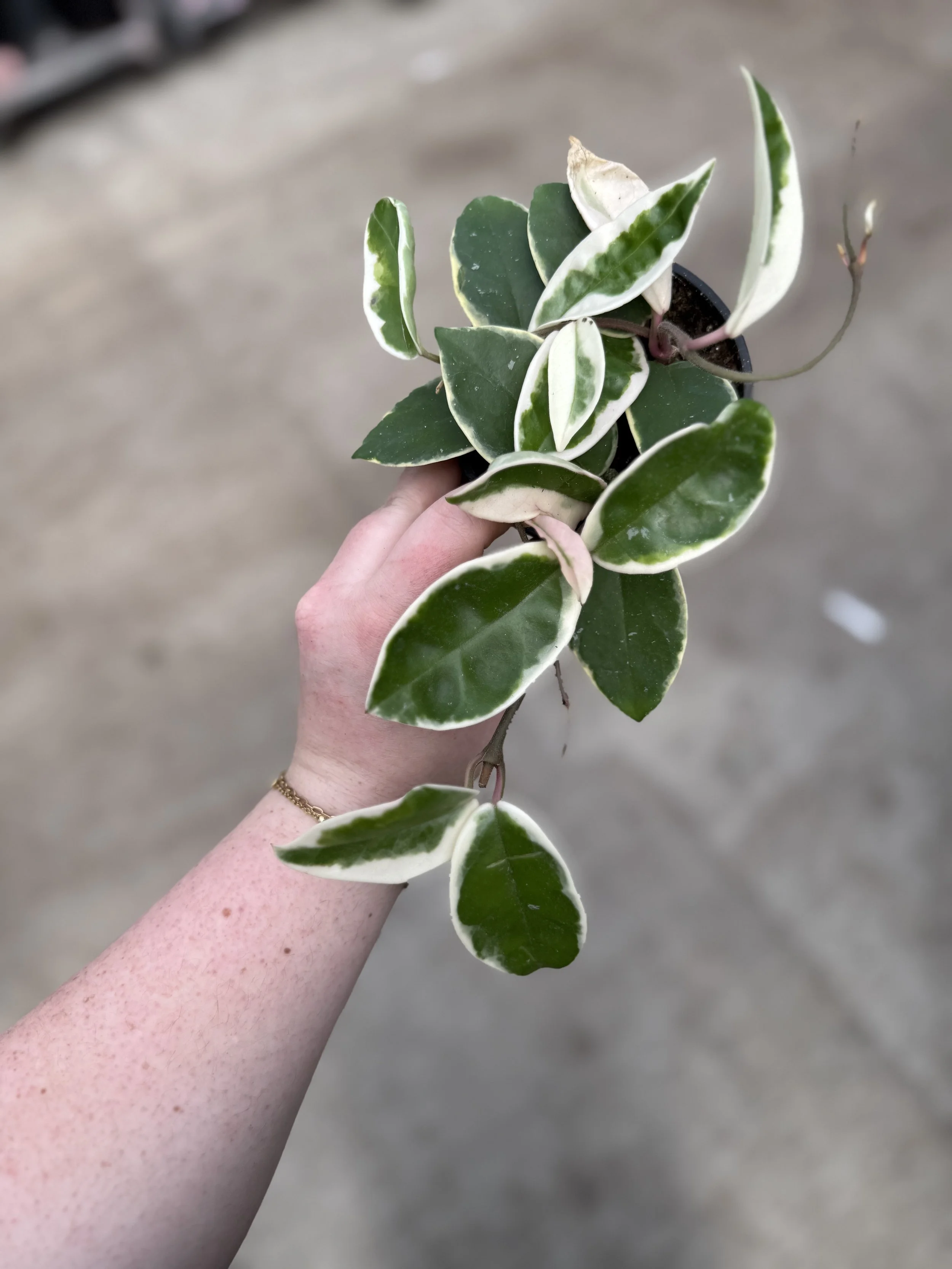
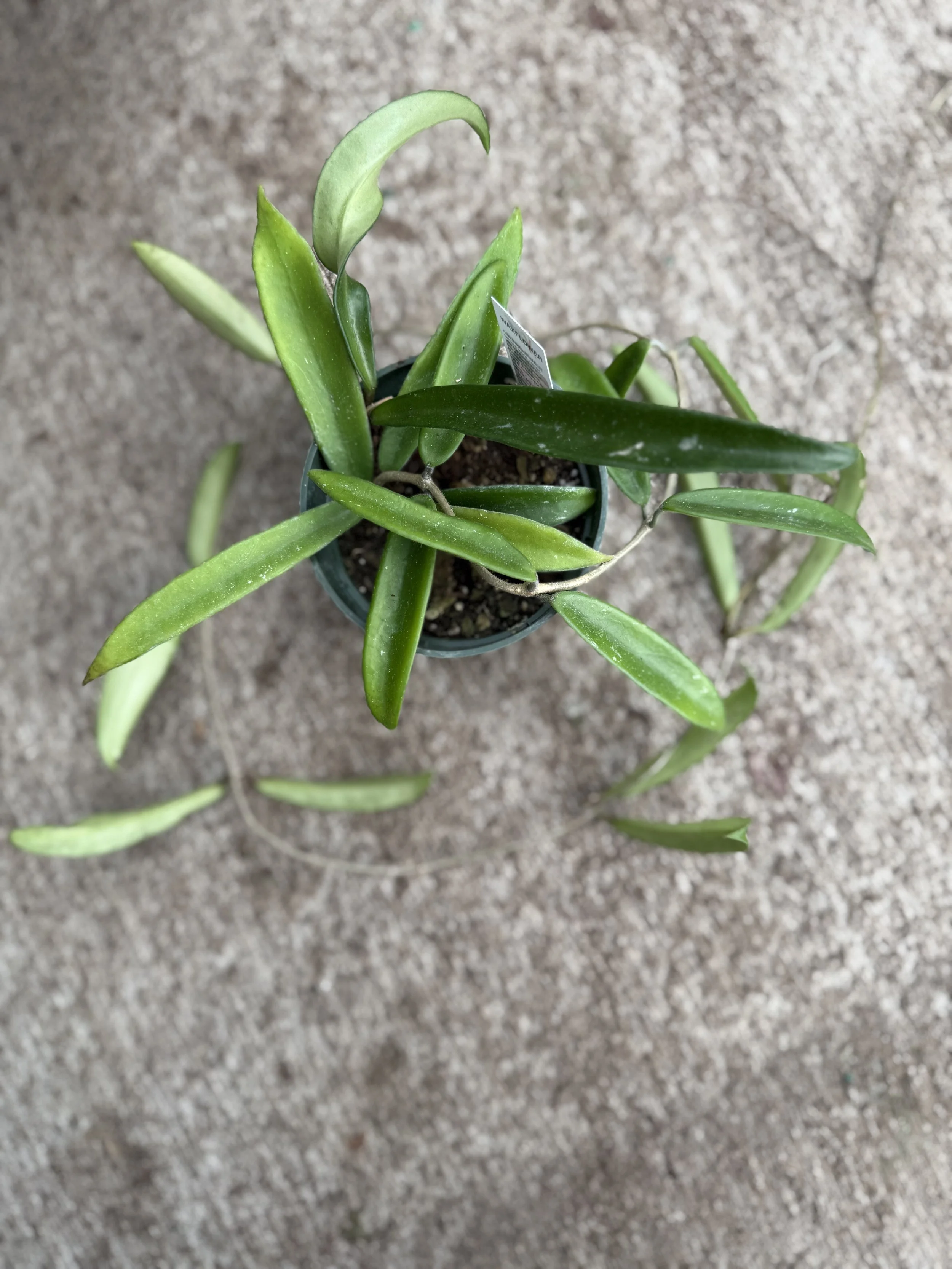
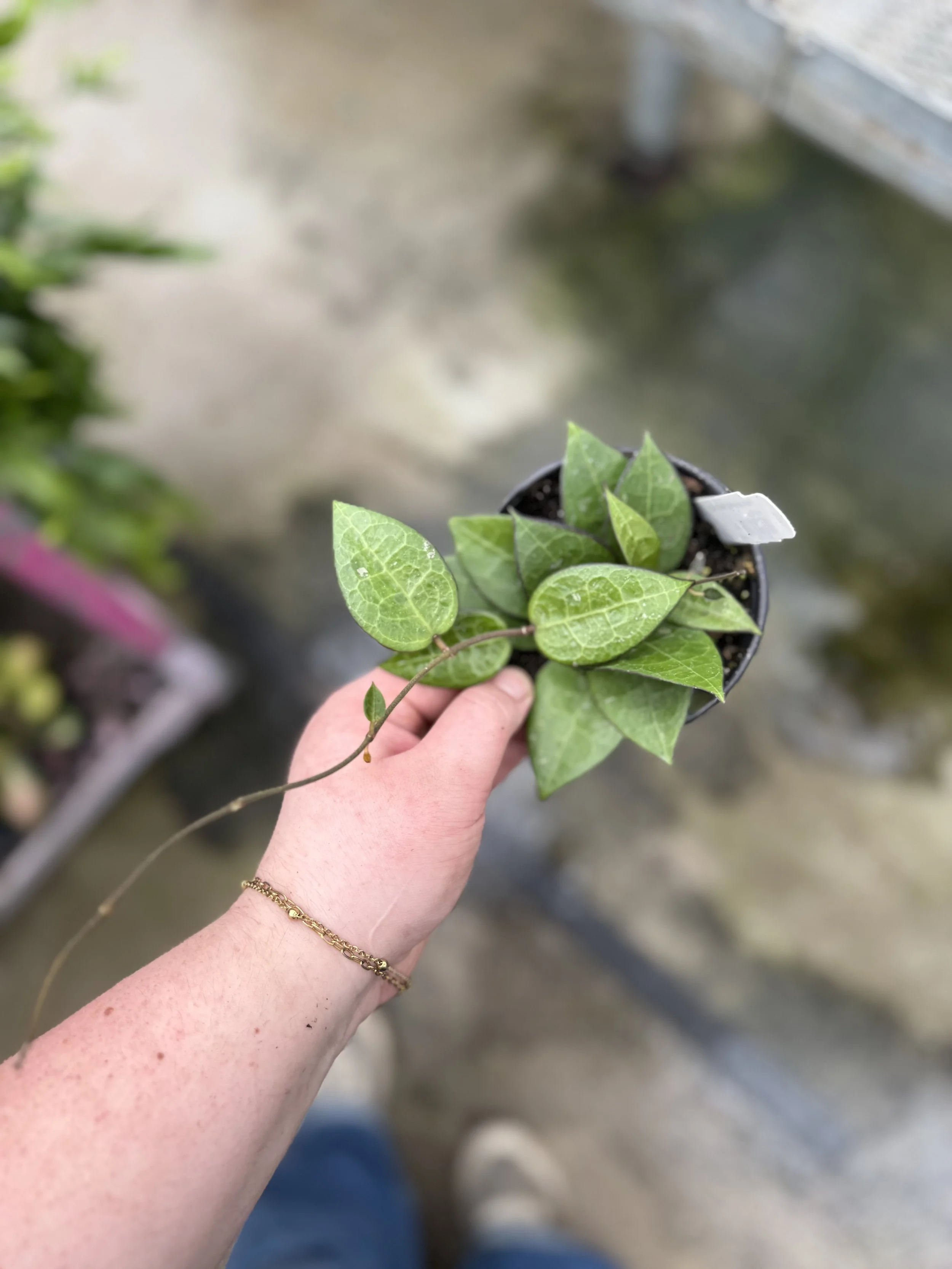
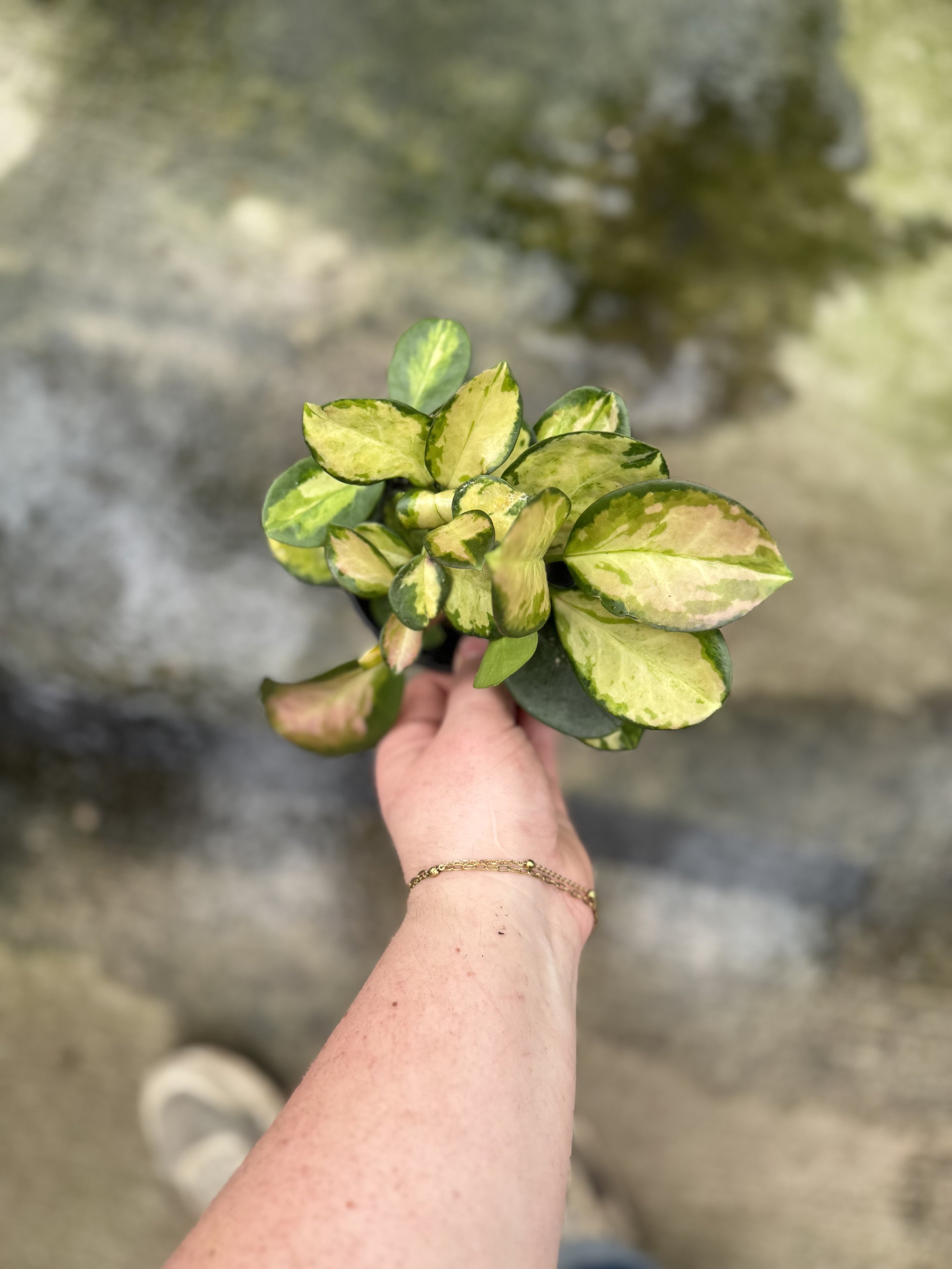
I love hoyas not necessarily for the rapid growth, but because each new leaf feels like a reward for doing something right. It’s especially encouraging when I water each week & find multiple!
For those just getting into hoyas, I always like to recommend pubicalyx, krimson queens or mathildes. They have unique, hoya foliage while still being easy care, neglect friendly & fast-growing. Once you start watching them grow under your care, be warned, they become addicting.
There are literally THOUSANDS
As of writing this post, there are 547 recognized hoya species. & of those 547, there are multiple variegations & varieties. For instance, compacta, krimson queen, chelsea, krimson princess, carnosa freckles & krinkle 8 are all varieties of Hoya carnosa. Besides all of these species, there are crosses (2 species crossbred) that might not be recognized as their own species yet.
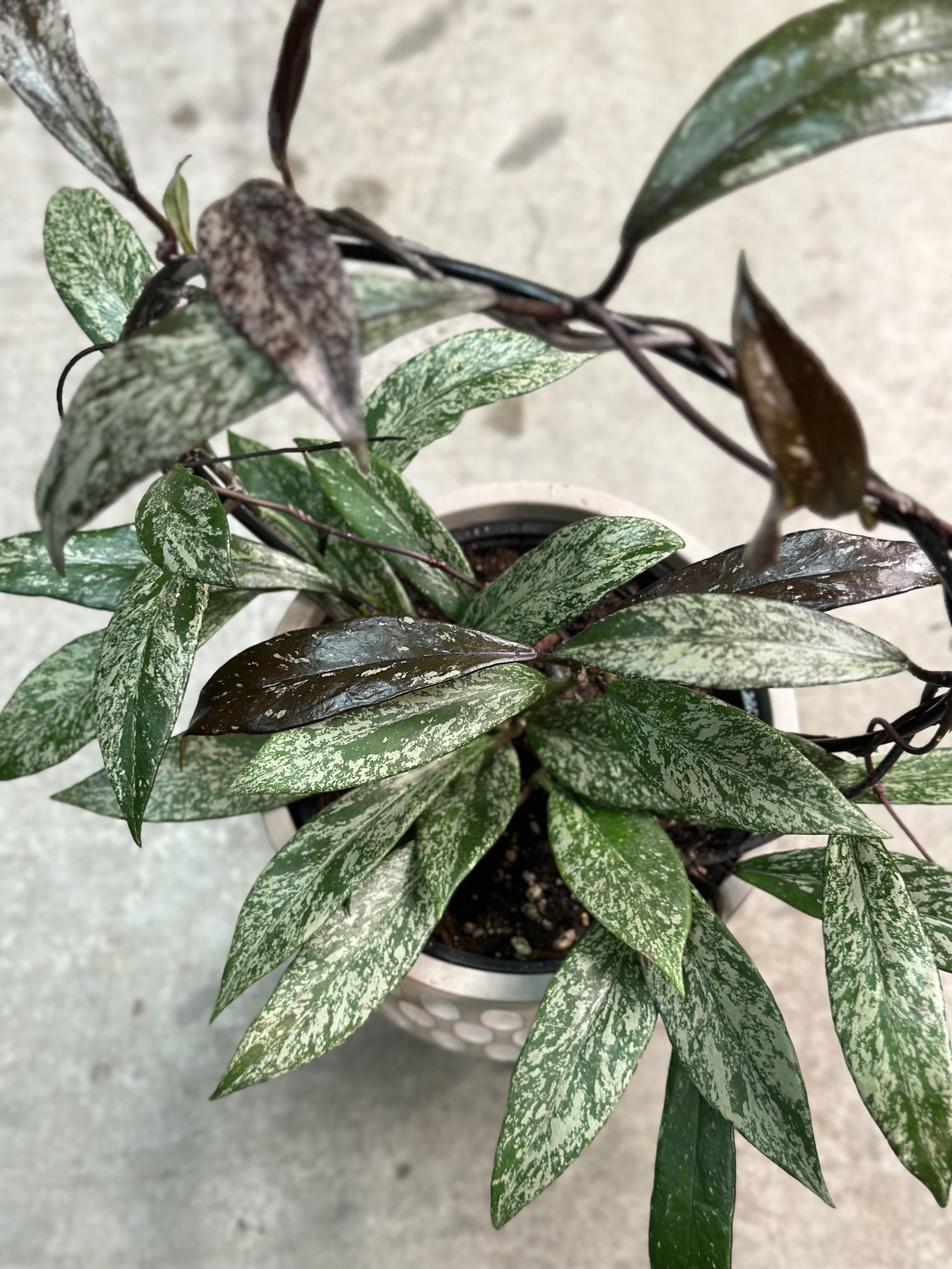
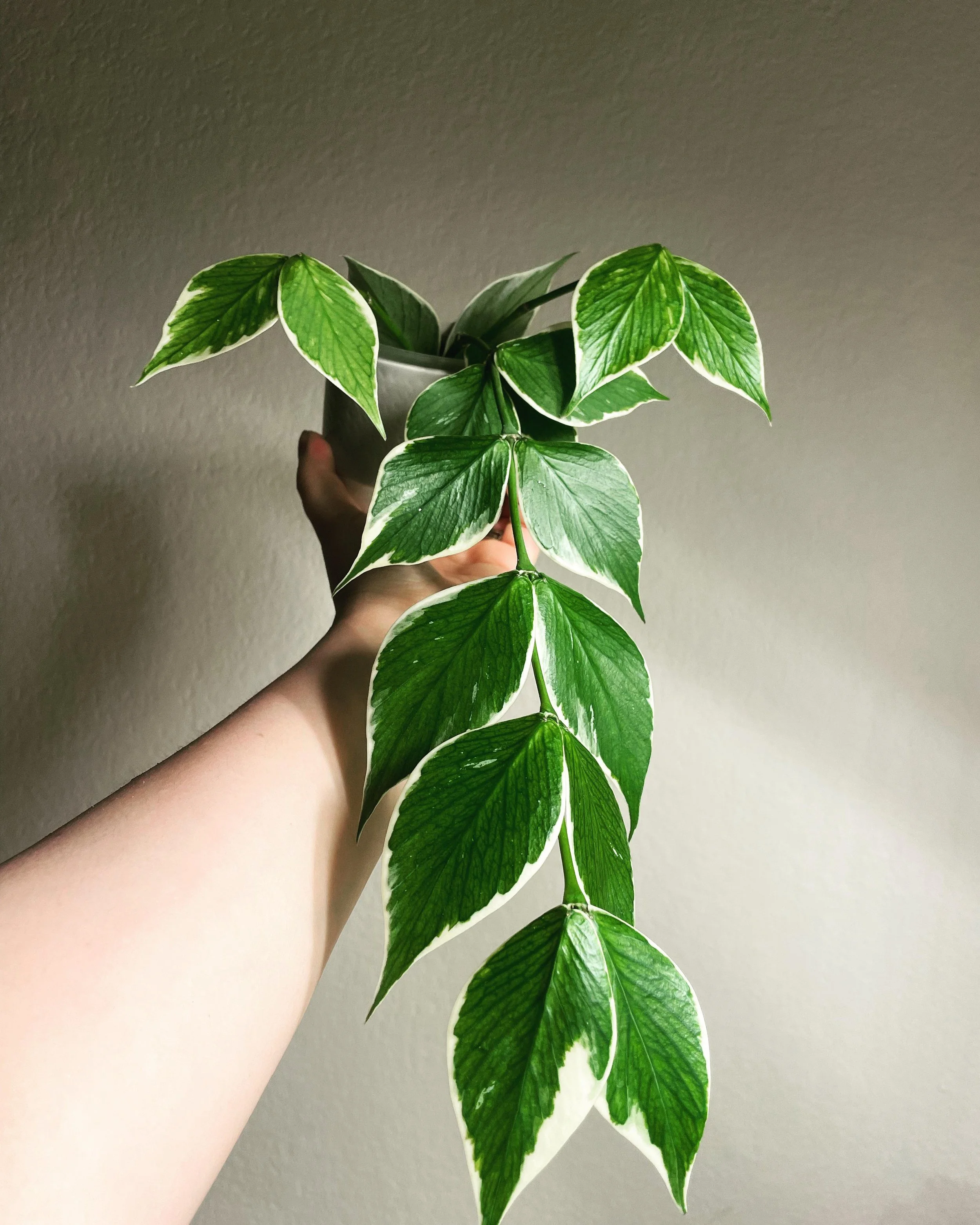
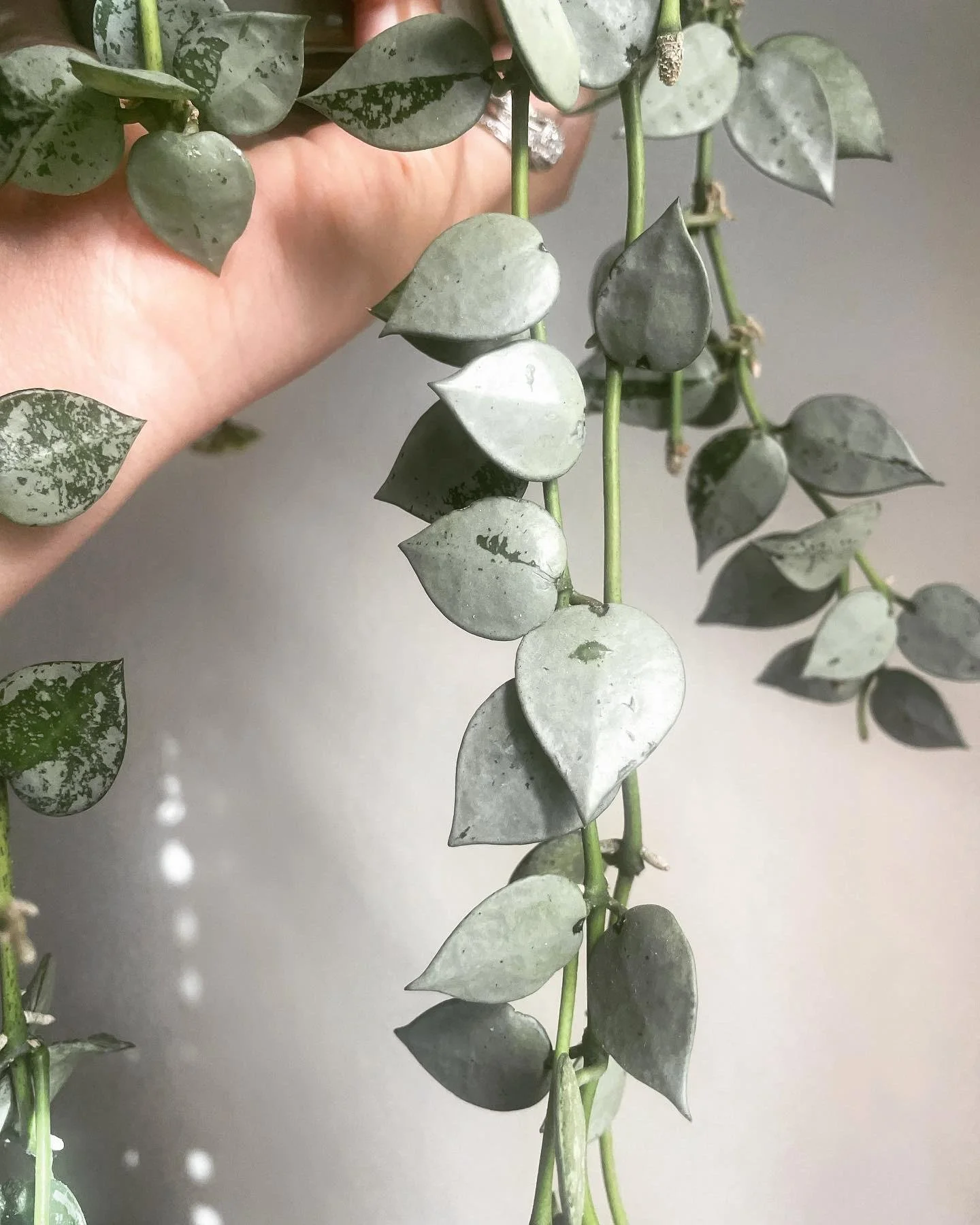
Hoyas also vary greatly in appearance & can even vary in care. There are thin leafed hoyas, bush hoyas, small leafed hoyas, large dinner-plate sized leafed hoyas, hoyas with round leaves, hoyas with heart-shaped leaves, ones that like lots of sun, ones that prefer a cooler temperature, etc. There are also plenty of different colors. From yellow, to various shades of green, to purples, to pinks, to reds, to silvers & ones with white variegation. Personally, I like to collect what are called “splashy” hoyas, ones with splashes of white or silver variegation throughout the leaves, & silver variegated hoyas. Below you can find a few of my all time favorites.
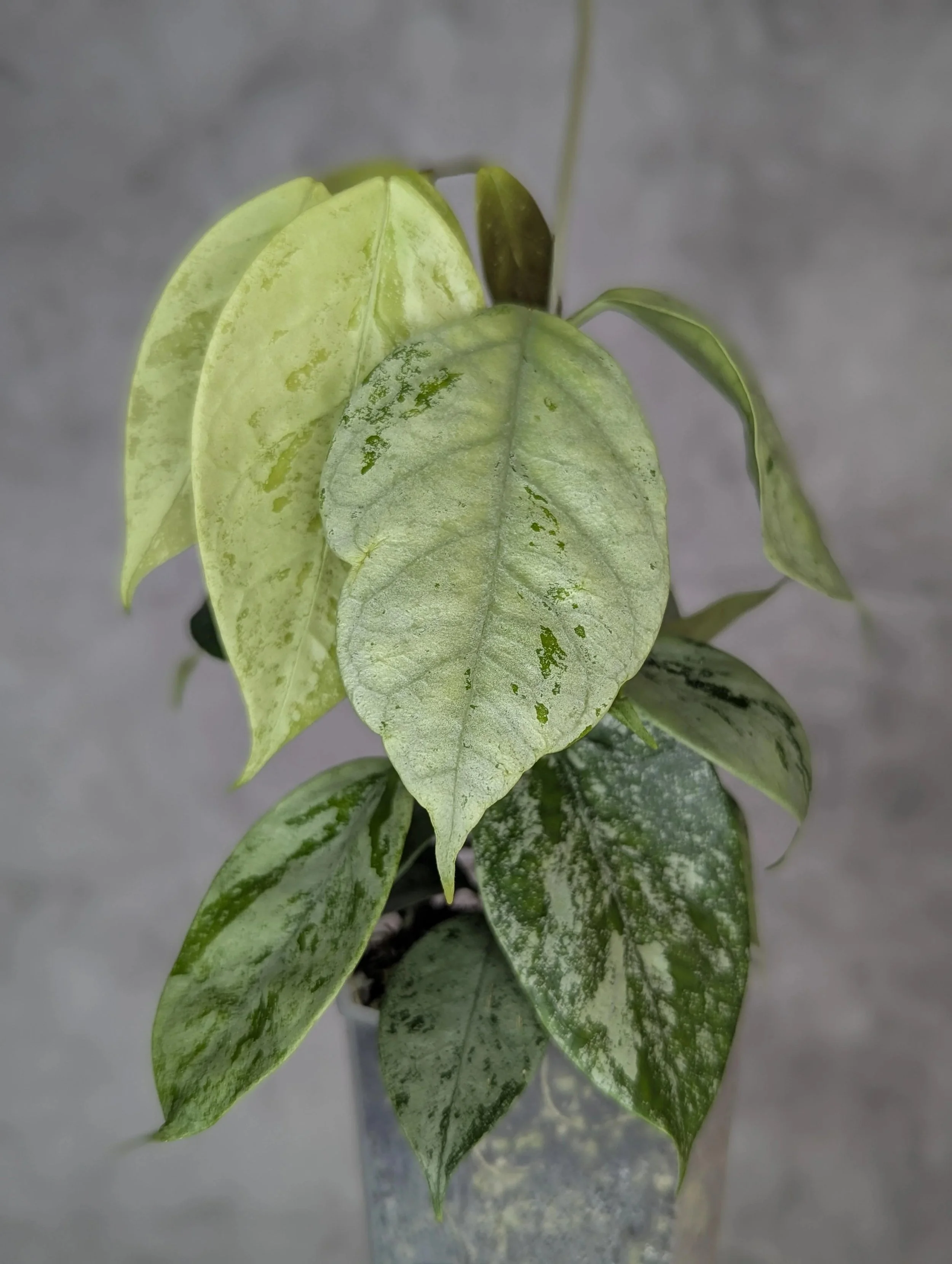
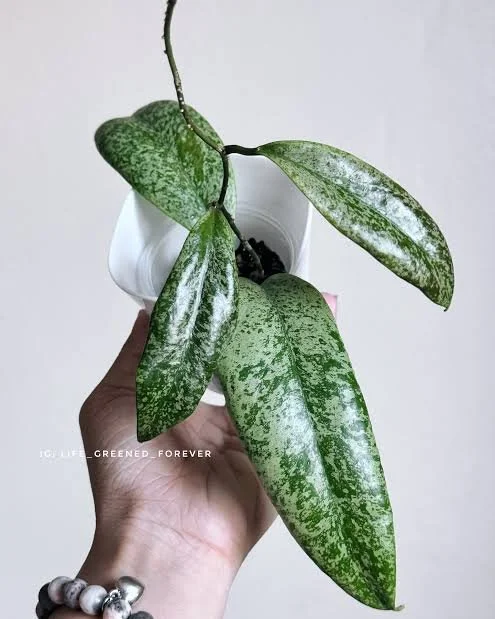
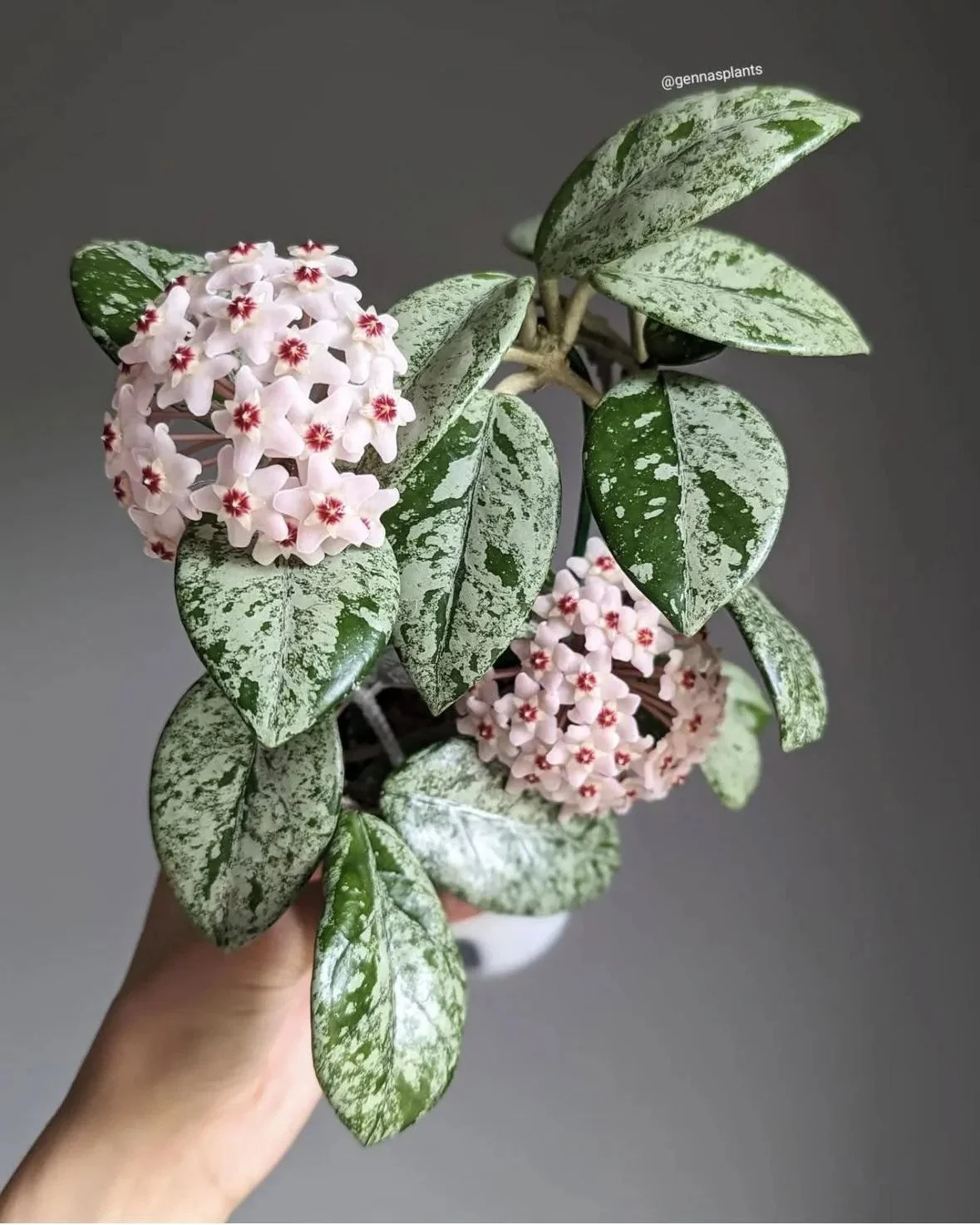
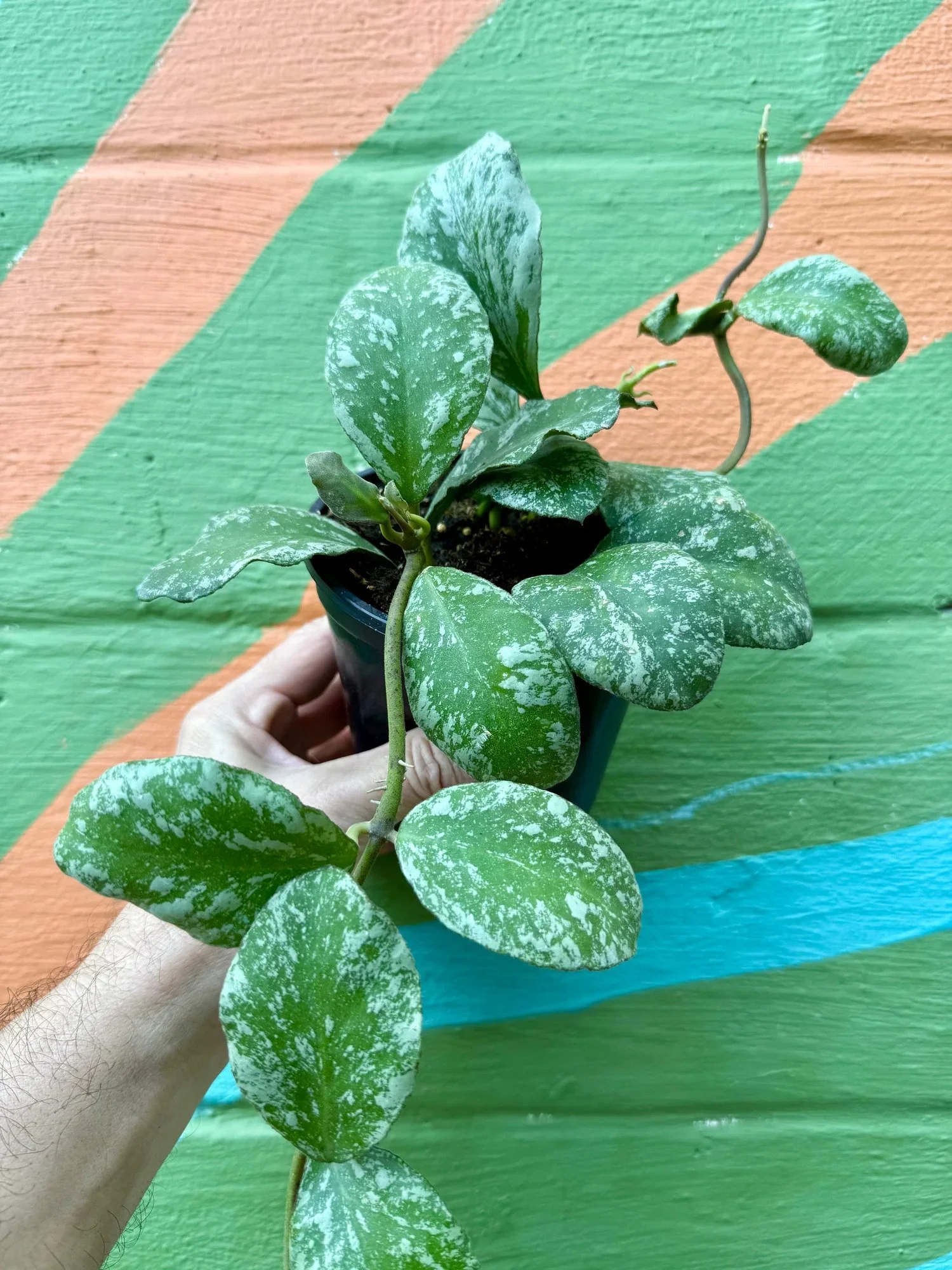
Some of our customers choose to collect hoyas that fit into a specific category, whether that be species type, growth pattern, leaf size or color. Regardless, you will never be able to collect them all—which is part of the fun!
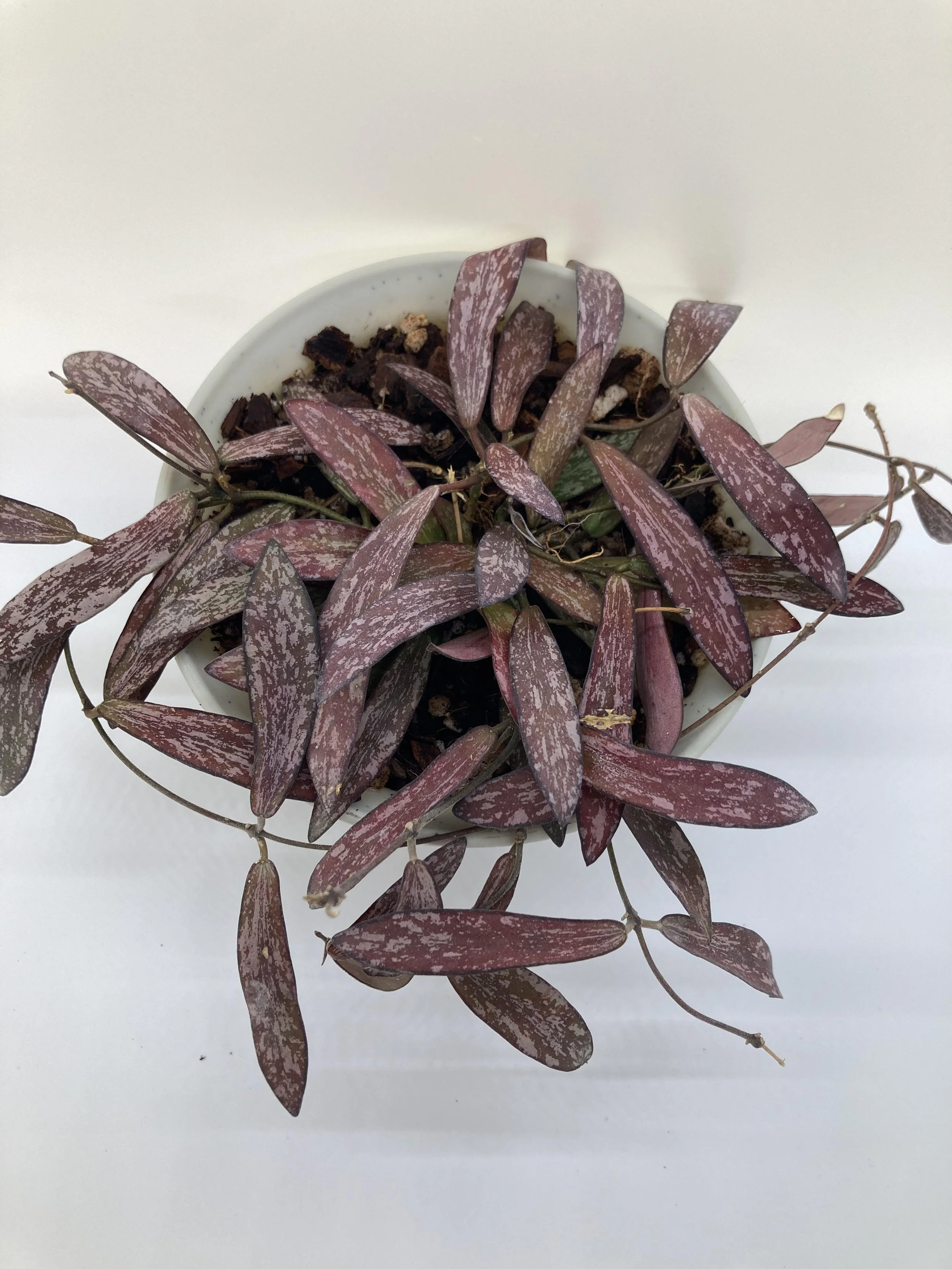
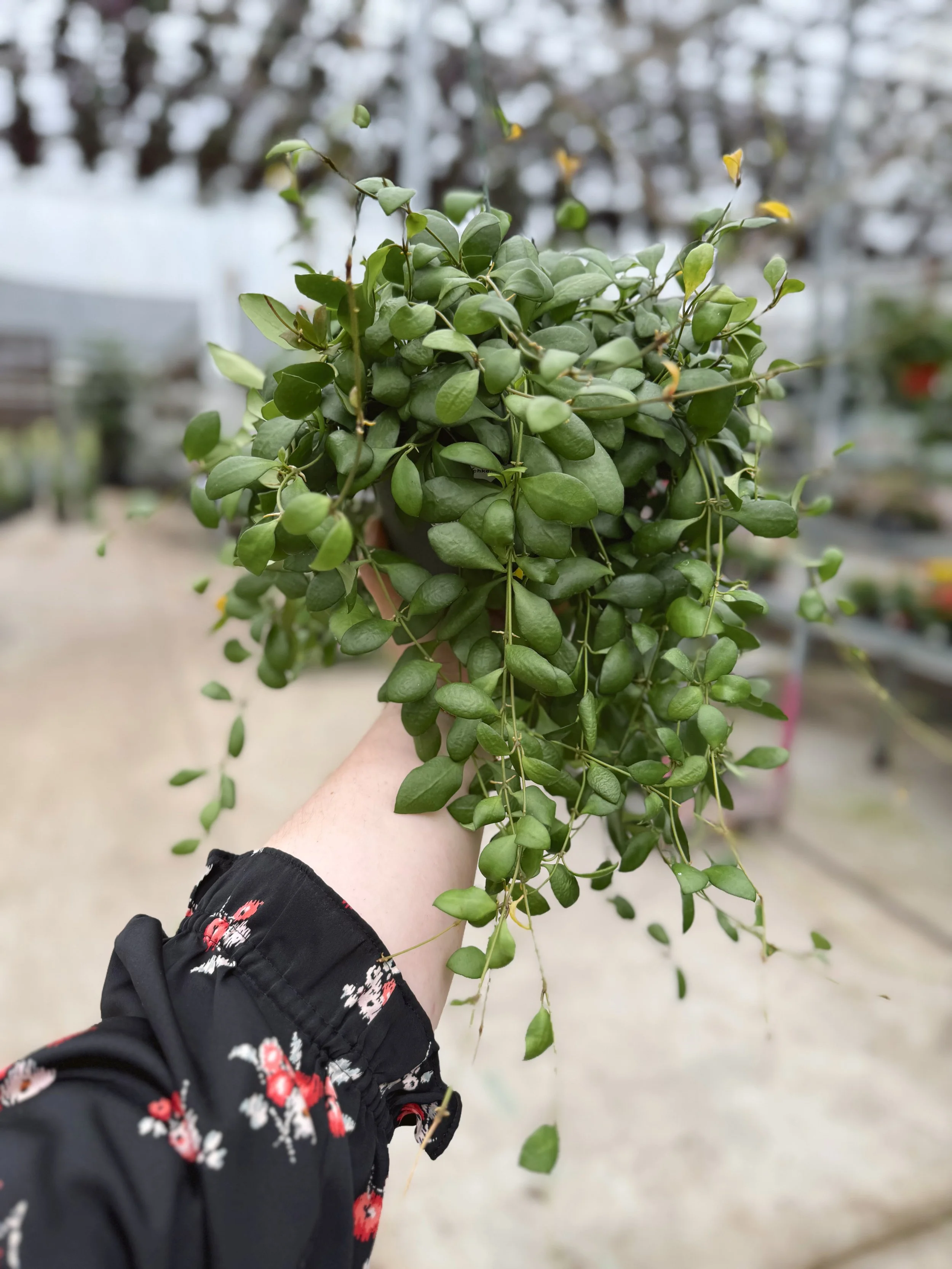
Sharing is Caring: Hoyas are Easy to Propagate
If you have a friend you really like, Hoyas are easy to propagate. My favorite method is using a mix of perlite & fluval stratum (read more about this fresh water aquarium substrate in another post), but you can root them all kinds of ways, including sphagnum moss, water, soil, air layering, etc. For woodier stemmed plants, be sure to let them callous for a few hours to days before adding to your water or substrate. You can also use a rooting hormone to help keep your cuttings from rotting before they can root. We recommend this one. By the way, anything we recommend is something we have personally tested first as a consumer before bringing it into the shop.
When cutting your hoya, look for small bumps along the stem for rooting points. When in doubt, try to root where there is a leaf attached.
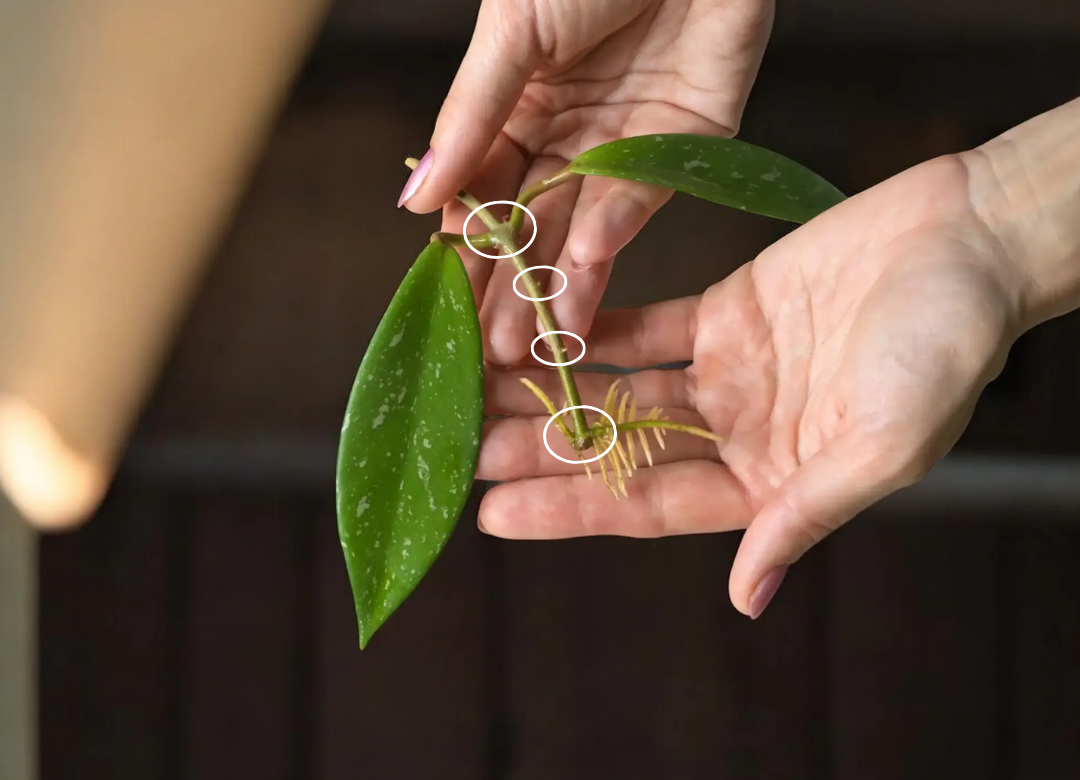
Rooting Points on a Hoya Cutting
They Bloom!
Now, personally, I wouldn’t call the blooms the main event for these plants, though I know for others, they are. Blooming a hoya takes time, care & a little luck. But when you do get them to bloom, they are showshoppers.
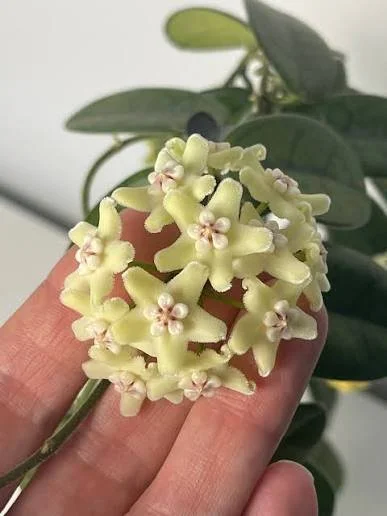
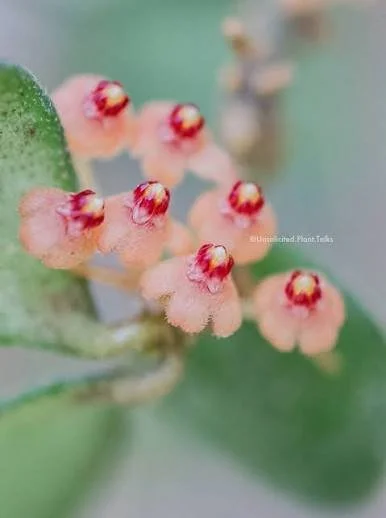
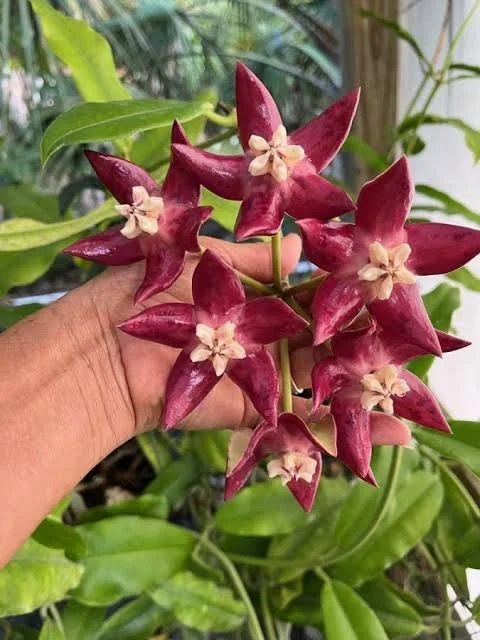
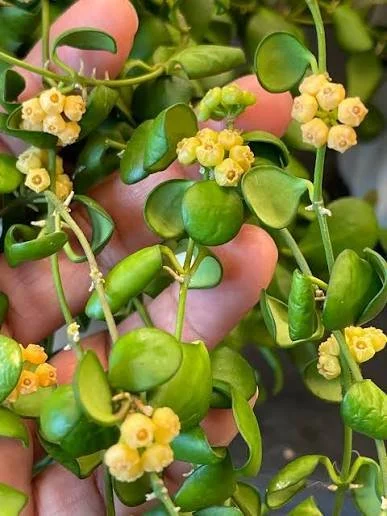
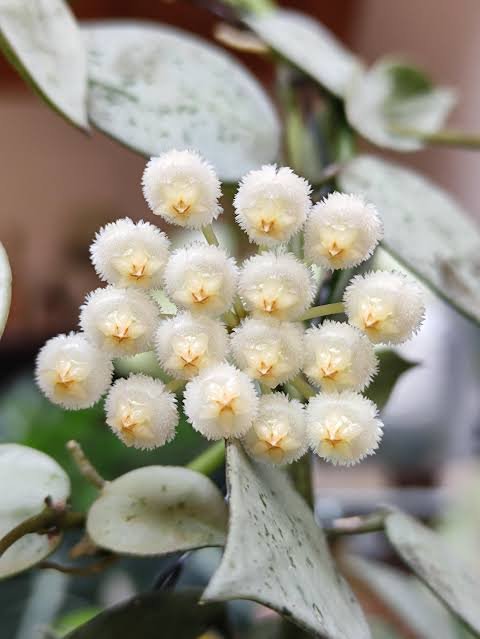
Luckily, there are some hoyas that are considered “prolific bloomers,” meaning they bloom consistently & easily. These include several crosses like rosita & mathilde. Also look for bella, pubicalyx, krohniana, lacunosa, multiflora & burtoniae. My burtoniae blooms about every 5-6 weeks on average, while my mathilde might bloom every 3 months. In our shop, multifloras will bloom almost constantly under the right care.
Part of what makes hoya blooms so desirable is the scent profiles. Unlike what we think of floral scents, hoyas can smell like all kinds of things like caramel, chocolate, movie theater popcorn butter, butterscotch, lemon, nutty tahini, musty floral, burnt plastic, etc. I can’t confirm this, but I have heard from several collectors that their scents can change as the plant matures, becoming more sweet & pleasant as it gets older.
I would be remiss if I didn’t at least mention the variety in appearance the blooms can have. Blooms can vary in size from a few millimeters to 9 centimeters. They can be almost any color from white, to purple, to pink, to yellow, to red. Some of my favorites have multiple colors on each flower. Some can even be fuzzy! They all bloom in clusters from peduncles (often stiff, nubby head of a vine that anchors blooms). Clusters can be only a few flowers to a couple hundred.
Calling All Chronic Underwaterers
If you are anything like me, a chronic depression sufferer with ADHD & a busy lifestyle, you probably struggle with underwatering. & it’s extremely discouraging to come home to plants you love deteriorating because of lack of care. Hoyas thrive on neglect. Well, mostly. When you purchase any new hoya, be sure to confirm that it is one that doesn’t want to stay consistently moist, as some (not many) do. As a general rule though, hoyas want to go completely dry between waterings. As long as they are in the right lighting, they can thrive with biweekly waterings. In higher humidity, you can stretch out watering even further.
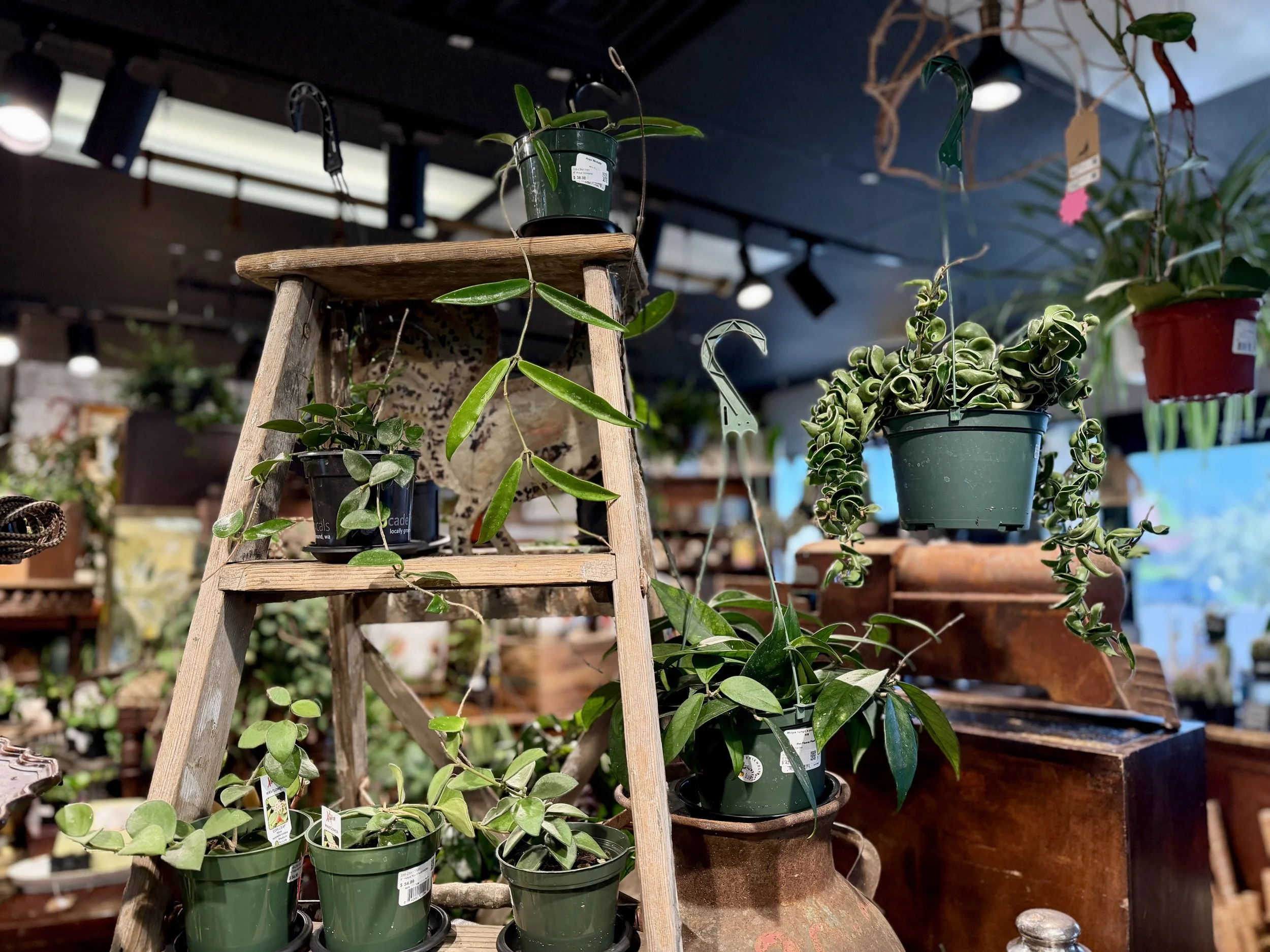
Hoya Display at Cat & Mouse Plants
Hoyas are Pet-Safe
The best part about hoyas? They are pet-safe! Really, there aren’t many options for neglectful plant parents looking for something pet-safe AND cool. But fortunately for you & me, hoyas fit that bill.
Looking for other pet-safe plants? Check out our blog for more recommendations.